


























































This morning, the U.S. FDA provided full approval to Boehringer Ingelheim for idarucizumab (Praxbind), its specific reversal agent for dabigatran etexilate mesylate (Pradaxa).
This morning, the U.S. FDA provided full approval to Boehringer Ingelheim for idarucizumab (Praxbind), its specific reversal agent for dabigatran etexilate mesylate (Pradaxa).

FDA approves the development of VAR 200 for the treatment of focal segmental glomerulosclerosis (FSGS) in adults.

FDA exercises enforcement discretion regarding its ExeGen ATM MiniSwine model, clearing the genetically engineered (GE) to model ataxia telangiectasia (AT) for commercial use as a research tool.

This morning, Galapagos announced the design of its global Phase 3 program of GLPG1690 in patients with idiopathic pulmonary fibrosis (IPF).

The angle of the superior cerebellar artery outlet can be useful for monitoring the progression of basilar artery dolichoectasia in patients with Pompe, according to results in the Orphanet Journal of Rare Diseases.

Positive clinical results from Phase 1 and Phase 1/2 open-label extension studies of givosiran were presented by Alnylam at the European Association for the Study of the Liver 53rd Annual International Liver Congress.

On Thursday, GlaxoSmithKline (GSK) announced that it will be transferring its portfolio of approved and investigational gene therapies to Orchard Therapeutics in exchange for a 19.9% stake in the company.

Positive pre-clinical data is released regarding BGB601 for the treatment of fibrosis, idiopathic pulmonary fibrosis (IPF), and non-alcoholic steatohepatitis (NASH).

NGM Bio announced this morning that it will be highlighting data from its Phase 2 clinical trial of NGM282 in patients with primary sclerosing cholangitis at The International Liver Congress.

Deborah Brown, Chief Mission Officer of the American Lung Association (ALA), discusses the ALA’S most recent LUNG FORCE Expo in Cherry Hill, New Jersey, 2018.

The U.S. FDA granted Fast Track Designation for RP6530 (Tenalisib). Rhizen Pharmaceuticals S.A. is developing the drug for the treatment of patients with relapsed and/or refractory cutaneous T-cell lymphoma.

Marshall Summar, chief of the Division of Genetics and Metabolism at Children’s National Health system, discusses the success of the Children’s National Rare Disease Institute in 2018.

Dawn Laney, MS, CGC, CCRC, Assistant Professor and Director, Emory Genetic Clinical Trials Center, talks misdiagnosis in Fabry disease through a case study.

Pfizer announced that it has begun a Phase 1b clinical trial for PF-06939926, its mini-dystrophin gene therapy candidate, intended for boys with Duchenne muscular dystrophy.

The Phase 2 CARDINAL study is evaluating bardoxolone methyl (bardoxolone) in patients with chronic kidney disease because of Alport syndrome.
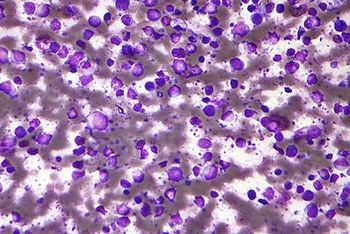
Results from a new study led by researchers in the CCR at the NCI could potentially explain why some patients with diffuse large B-cell lymphoma respond to treatment and others don’t.

FDA approves Phase 2 study of KD025, a a possible treatment for graft-versus-host disease (GVHD).

CEO of Krystal Biotech discusses first topical gene therapy for dystrophic epidermolysis bullosa.

Results from a study published in Nature Communications offer potential treatment targets for melorheostosis, often referred to as “dripping candle wax” bone disease.

The self-administration of pnf C1-INH (Berinert) proves effective for patients with hereditary angioedema with C1 inhibitor deficiency.

Data from the article, “Fabry disease in the Spanish population: oberservational study with detection of 77 patients,” suggests that enzymatic screening for Fabry disease in risk populations assisted in identifying undiagnosed patients.

This morning, it was announced that everolimus (Afinitor DISPERZ) has become the first therapy to be specifically approved by the U.S. FDA to treat patients aged 2 years and older with tuberous sclerosis complex (TSC)-associated partial-onset seizures.

Higher-quality epidemiological data is needed in all 4 subtypes of Sanfilippo syndrome for better disease research and management.

André the Giant, examines the life and work history of the WWE Hall of Famer. Unbeknownst to many, his size was the result of gigantism, a disease caused by excess growth hormone. The condition led to his eventual diagnosis with acromegaly, a rare endocrine disorder.