





Type 1 Diabetes
Latest News

Advertisement
Latest Videos


Podcasts





CME Content























































Advertisement
More News

While the ACT program did not benefit patients in the study’s primary outcome measure, it did lead to some other benefits for those with type 1 diabetes.

More than half of patients who received a pancreas transplant alone experienced >50% decline in eGFR, had eGFR < 30 mL/min/1.73 m2, and/or received a kidney transplant 10 years after their initial pancreas transplant.

Despite the known association between infectious disease and type 1 diabetes, results showed no impact on risk of latent autoimmune diabetes in adults.

In the Dapa-ON trial, the careful selection of people with T1D and the implementation of strategies to reduce the risk of DKA were associated with dapagliflozin's appropriate safety profile.

This episode features a discussion on a pair of AID system integrations with the Dexcom G7 CGM system as well as important updates in the diabetes technology portion from the ADA's Standards of Care—2024.

Global incidence of T1D among children and adolescents <20 years old is substantial, but these rates exhibited significant variability by country, region, and age group.

Patients with T1D diabetic retinopathy showed a longer duration of diabetes and increased age, compared to those without retinopathy.

Results from the MOMPOD RCT indicate metformin added to insulin did not reduce the frequency of a composite adverse neonatal outcome in pregnant adults with diabetes.

Multinational data support the safety of drug classes like GLP-1 agonists during early relative to infant risk of major congenital malformations.

Phase 3 data show patients with obesity who maintained tirzepatide from weeks 36 to 88 continued significant weight loss versus patients switched to placebo.

A trial comparing baricitinib against placebo in people with new-onset type 1 diabetes suggests use could contribute to the preservation of β-cell function.
An overview of the journey and significant events of 2023 that have catapulted semaglutide from a type 2 diabetes agent to the topic of discussions among circles across healthcare and beyond.

In a new study focusing on adults with type 1 diabetes and mild-moderate depressive symptomatology, a CBT program helped depression symptoms, quality of life, anxiety, treatment adherence, and total diabetes-related stress in emotional, physical, and impersonal subscales.
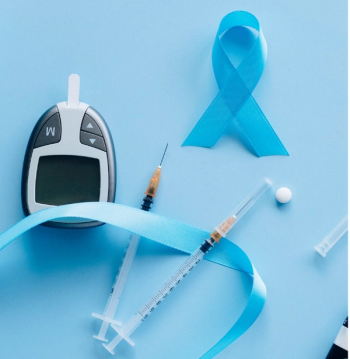
Mothers with mood disorders—either bipolar disorder, major depressive disorder— or schizophrenia/ schizoaffective disorder are not associated with their offspring’s risk for type 1 diabetes. Results suggest mothers with bipolar disorder tend to develop type 1 diabetes, but data is not clinically significant.

The study did not find an association between glycemic parameters and flow-mediated dilation, but they did find associations between lower sleep efficiency with poorer glycemic control, insulin resistance, estimated glucose disposal rate, and HbA1C.

Consumers should avoid Dr. Ergin’s SugarMD Advanced Glucose Support due to an increased risk of adverse events including hypoglycemia.

In our October 2023 endocrinology month in review, our editorial team highlights regulatory updates, pipeline news, and conference data capturing the attention of the field during the month.
In this episode, hosts discuss the FDA clearance of the Omnipod 5 App for iPhones and a pair of studies examining use of automated insulin delivery systems.

A study from investigators in Italy sheds further light on the relationship between physical activity and diabetic polyneuropathy risk in patients with type 1 diabetes.
In this episode, hosts discuss data from the PROTECT trial, which examined the effects of teplizumab on beta-cell function in patients with newly diagnosed type 1 diabetes.
The FDA has granted 510(k) Clearance to the Omnipod 5 app for iPhone, making Insulet Corporation the first to offer a tubeless AID system with smartphone control.

Exposure to maternal diabetes during pregnancy is associated with an increased risk of depression and anxiety in offspring later in life, according to a new study.

An analysis of more 13,000 children with type 1 diabetes suggests puberty onset in children with type 1 diabetes is occurring earlier now than it had been at the turn of the century.

In the PROTECT trial, teplizumab preserved β-cell function in newly diagnosed type 1 diabetes patients, slowing the decline of C-peptide levels, but key secondary endpoints, such as time in range and HbA1c, showed numerical trends without statistical significance.

Despite access to care and health insurance, Hispanic and non-Hispanic Black individuals with diabetes experience poorer glycemic control compared to non-Hispanic White counterparts, revealing persistent racial disparities in healthcare.
Advertisement
Advertisement
Trending on HCPLive
1
The Benefits and Limits of Enlicitide, With Ninel Hovnanians, MD
2
RELIEVE-AD-PEDs: Dupilumab Sustains Adolescent Atopic Dermatitis Control at 1 Year
3
Conservative Therapy in Fibrillary GN: A Four-Drug Kidney-Protective Approach
4
EADV 2026: TNFα, OX40L Cluster at HS Draining Tunnels
5