











































In this episode, hosts are joined by Grazia Aleppo, MD, to discuss the development of guideline recommendations for diabetes technology as well as her top takeaways from the ATTD 2023 meeting.
In this episode, hosts are joined by Grazia Aleppo, MD, to discuss the development of guideline recommendations for diabetes technology as well as her top takeaways from the ATTD 2023 meeting.

Data from a trio of studies presented at ATTD 2023 provide insight into the utility of the Omnipod 5 across multiple patient populations as well as use for use in inpatient settings.

Announced on March 1, Eli Lilly and Company's reduction in insulin product list prices includes non-branded insulin lispro, Rezvoglar, KwikPens, Humulin, and Humalog. The company would also be instituting an out-of-pocket cost cap of $35 for most insulin users.

Hosts are joined by the associate director of Medical Affairs and Medical Education at MannKind for a special edition episode from ATTD 23 that focuses on use of inhaled insulin and future research plans for MannKind.

In this episode, hosts are joined by Marissa Town, BSN, RN, and Renza Scibilia for a discussion centered around the role of the patient voice in diabetes management while on site at ATTD 2023.
Medha Munshi, MD, discusses the concept of healthy aging in diabetes and offers perspective on contemporary trends in hurdles and optimized strategies to achieve healthy aging in people with diabetes.

In this episode, Irl Hirsch, MD, discusses a study he is conducting examining skin changes associated with insulin pump use in people with type 1 diabetes. Later in the episode, Hirsch discusses what he is most excited about in terms of ongoing and future research in diabetes management.
In this episode from ATTD 2023, hosts are joined by Joanne Rinker, MS, RDN, who provides perspective on hearing loss in diabetes, including prevalence, the need for screening, and the underecognition of auditory issues in the midst of a growing population of people with diabetes.
In this episode, hosts sit down with Katharine Barnard-Kelly, PhD, at ATTD 2023 to discuss the evolving recognition of the role of psychology in diabetes management for both pediatric and adult populations.

A study and a subanalysis of the same study presented at ATTD 23 demonstrate use of the FreeStyle Libre flash glucose monitoring system was associated with improved treatment satisfaction and HbA1c.

Drs Robert Busch, Robin S. Goland, Kimberly Simmons, and Teresa Quattrin discuss strategies to facilitate screening of type 1 diabetes and improve management of disease.

Experts in endocrinology share their approach to managing type 1 diabetes along with related health conditions.

At ATTD 2023, hosts Diana Isaacs, PharmD, and Natalie Bellini, DNP, have an extended conversation with the new chief operating officer at Dexcom, Jake Leach, to discuss the global and US rollouts of the Dexcom G7 and what the future might hold for Dexcom.

A pilot study presented at ATTD 23 is providing further insight into the potential role of inhaled insulin in type 1 diabetes.
David Maahs, MD, PhD, sits down to discuss data he presented at ATTD 2023 and provide perspective on ongoing issues plaguing the diabetes community, including optimization of telehealth and addressing disparities in care.

An analysis of Veterans Affairs data from more than 20,000 people with diabetes provides an overview of the associations of CGM initiation with improved glycemic control and reduced hospitalization in this patient population.
An analysis of data from more than 5000 youths with T1D offers insight into the comparative ability of different treatment modalities for achieving glycemic control and optimal time in range.
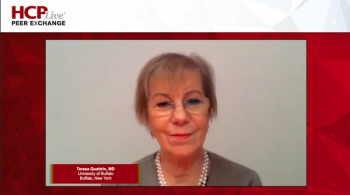
Teresa Quattrin, MD, reviews emerging clinical trial data on novel therapies to delay the progression of type 1 diabetes.

Kimberly Simmons, MD, MPH/MSPH, leads a discussion on long-term monitoring for patients with type 1 diabetes and which providers are most likely to administer and manage teplizumab treatment.

An analysis of NHIS data from 2016-2021 indicates the rate of overweight or obesity among adults with type 1 diabetes was comparable to the rate among the general population, but these people were less likely to receive lifestyle recommendations from their providers.
Experts in endocrinology share their approach to patient selection for teplizumab in type 1 diabetes and the impact of a 2-year delay in the onset of the disease.
Dr Kimberly Simmons reviews key findings from an initial study and extended follow-up on the safety and efficacy of teplizumab in delaying the progression of type 1 diabetes.

Robin S. Goland, MD, and Kimberly Simmons, MD, MPH/MSPH, provide insight on teplizumab, which was recently approved by the FDA, to delay the progression of type 1 diabetes, and they discuss the implications of autoantibody detection in patients.
Dr Teresa Quattrin discusses the significance of delaying the onset of type 1 diabetes.
Drs Diana Isaacs and Natalie Bellini highlight the need for engaging patients in shared decision-making and addressing social determinants of health in diabetes and obesity management in adults and pediatric patients.