
American College of Cardiology

Kramer, the president of the American College of Cardiology, discusses the organization’s recent movement to adapt rapidly growing AI technology to clinical care.
Advertisement

Deepak Bhatt, MD, MPH, MBA, discusses 4 trials to watch at the upcoming ACC.26.
This conference preview with Kathryn Berlacher, MD, MS, and Kristen Campbell, PharmD, highlights the top 6 trials to watch at ACC 2026.

Bhatt discusses his expectations for the future of cardiology in 2025, including GLP-1-RAs and the push towards combination therapy.

Payal Kohli, MD, explores how evolving tools and strategies in lipid management are reshaping preventive cardiology.
Advertisement
Ruff discusses his expectations for cardiology for the rest of 2025, including new research into GLP-1 receptor agonists.

Le discusses his anticipation for the results of upcoming cardiology trials in 2025, including HORIZON and Target-D.

Deepak Bhatt, MD, MPH, MBA, explores high-impact trials from ACC.25, including REVERSE-IT, Alpaca, ADVANCE-HTN, SOUL, STRIDE, and DapaTAVI.
In this episode, hosts break down the STRIDE and SOUL trials presented at the American College of Cardiology 2025 Annual Scientific Sessions.

Patients hospitalized for STEMI achieved similar outcomes with rivaroxaban as warfarin after three months of follow-up in the RIVAWAR trial.

In a new analysis at ACC.25, abelacimab reduced bleeding rates across the risk spectrum, with more benefits for those at higher bleeding risk.

Marc Bonaca, MD, MPH, examines the benefit of semaglutide on functional outcomes in PAD from the STRIDE trial at ACC.25.
A recap of 10 clinical trials in cardiovascular care to know from the American College of Cardiology 2025 Scientific Sessions.

Le examines the STRIDE, SOUL, and DapaTAVI trials presented at this year’s ACC Scientific Sessions.

Hosts discuss how recent advances in HFpEF have changed discussions surrounding how cardiologists should approach treatment sequencing.

At ACC.25, Boer highlights treatment gaps in the US for lipid control in a high-risk ASCVD population.

Ahmad Masri, MD, MS, discusses how new options change the historic approach to the treatment of newly diagnosed ATTR-CM.

Daniel Judge, MD, discusses data from a prespecified analysis of ATTRibute-CM examining the effects of acoramidis with and without concomitant tafamidis use.

Patients with PAH saw a 76% reduction in the composite of morbidity and mortality outcomes with sotatercept treatment.
Ahmad Masri, MD, MS, discusses data detailing the effects of aficamten in oHCM from the FOREST-HCM OLE study at ACC.25.

Vallerie Mclaughlin, MD, discusses the ZENITH trial and its historic effects of sotatercept on mortality, transplant risk, and more in PAH.
At ACC.25, Robert S. Rosenson, MD, discusses the efficacy and safety of solbinsiran, an ANGPTL3 inhibitor, in a population with mixed dyslipidemia.
Despite failing to achieve significance for its primary endpoint, investigators suggest the trial further demonstrates the potential of cell therapy in HFrEF.
Justin Mark, MD, discusses an analysis of the FIGHT trial looking at racial and ethnic differences in heart failure outcomes.
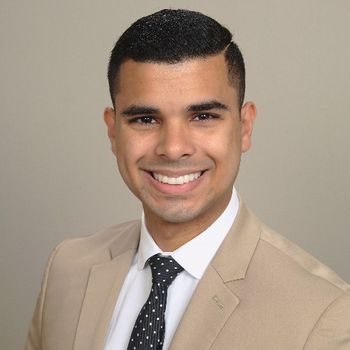
Jose Lopez, MD, discusses findings and perspective into racial and ethnic differences in DbCM from the ARISE-HF trial.
Ruff discusses a new analysis of AZALEA-TIMI 71 at ACC.25, which shows that the novel Factor XI inhibitor significantly lowered bleeding in elderly patients.
Hosts break down the STRIDE and SOUL trial results and reflect on how they might inform treatment strategies in the respective patient populations.

Steve Nissen, MD, discusses the phase 2 ALPACA trial and how it informs the potential of lepodisiran for lowering Lp(a).

Pulse oximeter bias was less negative in darkly pigmented skin, suggesting a difference in performance across skin pigment categories.
Advertisement
Advertisement
Trending on HCPLive
1
Half-Life vs. Real Life: How Real-World Evidence Is Reframing Wet AMD Treatment
2
FDA Grants Priority Review for Insmed's ARIKAYCE sNDA for MAC Lung Disease
3
When Innovation Builds Clinical Confidence: Evaluating Treatment Options in Hemophilia A
4
The HCPFive: Top News for Healthcare Providers from the Week of 09/13
5