

Participants receiving semaglutide had an overall hazard ratio of 0.76 in the composite primary outcome of kidney failure, serious eGFR decline, or death compared to placebo.
Participants receiving semaglutide had an overall hazard ratio of 0.76 in the composite primary outcome of kidney failure, serious eGFR decline, or death compared to placebo.
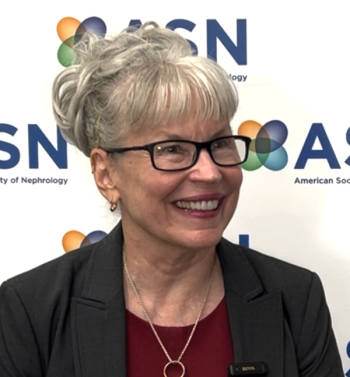
Carla Nester, MD, provides perspective on the results of the VALIANT trial and how it informs the role of pegcetacoplan in C3G and IC-MPGN .

VALIANT trial data support pegcetacoplan as the first effective therapy for proteinuria, C3c staining, and eGFR stability in C3G and IC-MPGN patients.

In these data presented at the Fall Clinical Dermatology conference, population-based data on utilization and duration of systemic corticosteroid exposure was highlighted.

In this interview, Kwatra highlighted several key takeaways from his talks on prurigo nodularis, atopic dermatitis, and itch at the Fall Clinical Dermatology Conference.

Herrington shared the carryover effects observed in the post-trial follow-up of the phase 3 EMPA-KIDNEY trial.

Yee discussed how the data show a benefit in this hard-to-treat population, similarly to the heterogeneous FSGS group.

Yale's KAT-AKI trial found personalized EHR alerts for AKI management improved clinician actions but didn't reduce progression, dialysis, or mortality rates in patients.

In this interview segment, Del Rosso highlighted his Fall Clinical presentation takeaways covered in the talk ‘What’s New in the Medicine Chest - Part 2.’

Zand discussed interim 12-month findings from an open-label, phase 2 trial currently ongoing for patients with refractory primary focal segmental glomerulosclerosis.

New research indicates semaglutide reduced albuminuria and body weight in CKD patients without diabetes, highlighting its potential renal benefits.

These data from the ADapt study, presented at Fall Clinical, suggest improvements among patients with eczema given lebrikizumab-lbkz who had been previously treated with dupilumab.
After discontinuing therapy, treated participants still had an overall 13% reduction in the risk of kidney disease progression or cardiovascular death.

New FINEARTS-HF data shows that finerenone reduces albuminuria in patients with HFmrEF or HFpEF, but without significant eGFR changes.

At AAO 2024, Khurana discussed rapid visual and structural gains for uveitic macular edema with vamikibart, paving the way for Phase 3 trials.

These data were presented at Fall Clinical, highlighting the reductions in Eczema Area and Severity Index scores and the overall long-term safety profile of tralokinumab-ldrm.

These data demonstrated guselkumab’s success for the majority of patients with low body surface area (BSA) moderate plaque psoriasis and special site involvement.

At AAO 2024, Garg describes an analysis of the Phase 2/3 PHOTON trial evaluating the effect of DME treatment history on aflibercept 8 mg and 2 mg outcomes.
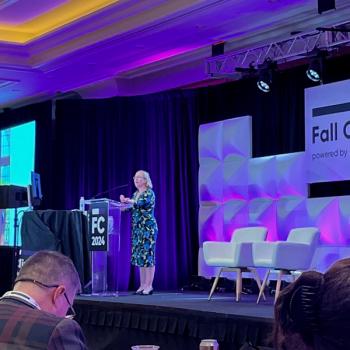
This talk was titled ‘Heard About It, Did It, Now it's Part of My Practice,’ during which Swanson highlighted creative options for conditions such as guttate psoriasis and pyogenic granulomas.

In the first part of his Fall Clinical presentation on new topical medications, Del Rosso discusses new therapies available for use among dermatologists.
A posthoc analysis of the DUPLEX trial suggests patients with genetic FSGS may experience a more pronounced and sustained antiproteinuric response with sparsentan.
Overall, 8 of 20 patients had complete or partial remission of their FSGS.
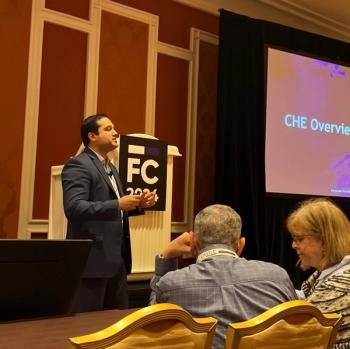
At the Fall Clinical Dermatology conference, Chovatiya presented on chronic hand eczema and facts about its pathophysiology, diagnosis, and management.

RIVUR analysis suggests recurrent UTIs in children with VUR may lower eGFR, even without kidney scarring, especially in those with multiple febrile infections.

In this interview with Chovatiya, he highlights some of the elements of the presentations being given at the Fall Clinical Dermatology conference in Las Vegas.

At AAO 2024, HO described meaningful BCVA improvements in patients with retinitis pigmentosa observed through 2 years of the Phase 2b/3 RESTORE trial.

At AAO 2024, Kay describes encouraging interim safety and efficacy results from the ATSN-201 gene therapy trial in patients with X-linked retinoschisis.

The data, which will be presented at a later time, may enable regulatory submission for accelerated approval to the FDA.

At AAO 2024, Khanani discussed data showing a 97% reduction in annualized injection needs at 9 months with RGX-314 gene therapy.

Jonathan Barratt, PhD, discusses his excitement surrounding data and programming at the American Society of Nephrology's Kidney Week 2024, with a focus on IgAN.