
Silverberg discusses the significance of the dupilumab approval in BP and why he thinks it's the most important news in dermatology in 2025 so far.
Silverberg discusses the significance of the dupilumab approval in BP and why he thinks it's the most important news in dermatology in 2025 so far.

In this segment of her SDPA interview, Orit Markowitz, MD, highlights several points about dermoscopy, including common issues with identifying benign lesions.
Orit Markowitz, MD, highlighted takeaways from her SDPA presentation on the recognition of benign patterns in dermoscopy.

From uncovering new benefits of semaglutide to targeting hypercortisolism in people with type 2 diabetes, here are 5 key updates from the annual meeting.

Chang reviews key points from her recent paper on the evolving landscape of eosinophilic esophagitis management and lingering knowledge gaps.

This interview at SDPA features Janelle Ball, founder and CEO of BC Educators, who discusses tips related to success with insurance authorizations.
This interview segment at the 2025 SDPA Conference highlights additional insights by Friedman on the management and diagnosis of chronic hand eczema, or CHE.
In an interview conducted at the 2025 SDPA Conference, Friedman provided several insights into management and diagnosis of chronic hand eczema, or CHE.

Verma discussed how recent advances in the field affect clinician management of type 2 diabetes and peripheral artery disease.

Dellon describes what excites him most about EoE recently but points to barriers to optimal care as well as unanswered research questions and clinical needs.
Verma discussed how new data from the STRIDE trial support the role of GLP-1 RAs as protective vascular medications.

Donovan and Feig shared exciting findings and further research from a study evaluating an insulin pump with Control-IQ technology with Dexcom G6 sensor.

From new data for potential IgAN treatments to the use of combination initiation therapy for type 2 diabetes and CKD, here are 5 key updates from the annual meeting.

In this report, Chovatiya highlights lebrikizumab’s evolving role in long-term atopic dermatitis management.
The report highlights lebrikizumab’s potential for sustained disease modification and its evolving role in long-term atopic dermatitis management.
Berry discussed findings from a retrospective, real-world study but emphasized that they should be confirmed in randomized controlled trials.
At SLEEP 2025, Levine discussed how skin biopsy testing for phosphorylated alpha-synuclein may enable early diagnosis and prevention trials for neurodegenerative diseases.
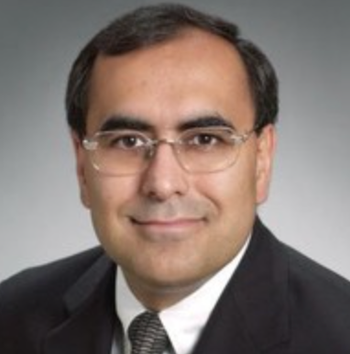
At SLEEP 2025, Sachdeva outlined evolving liability concerns, transparency issues, and steps clinicians can take to safely integrate AI in practice.
At SLEEP 2025, Levine highlighted how the Syn-One skin test detects early signs of Parkinson Disease in patients with iRBD with the observation of phosphorylated alpha-synuclein.

Full video: Experts discuss the overlap between immune-mediated inflammatory diseases in GI and dermatology, emphasizing the importance of cross-specialty care.
In the final segment of this HCPLive Special Report, experts discuss lingering unmet needs in cross-specialty care and look ahead to potential areas for improvement.
In part 2 of their HCPLive Special Report series, Raj Chovatiya, MD, PhD, and Adelina Hung, MD, continue their in-depth conversation.
In this HCPLive Special Report series, Raj Chovatiya, MD, PhD, and Adelina Hung, MD, discuss the connection between GI and dermatologic care.

Leading experts discuss managing atopic dermatitis in skin of color in a live recording from the 2025 Revolutionizing Atopic Dermatitis Conference.
Verma went over the STRIDE trial evaluating the GLP-1 RA and its latest findings presented at ADA Scientific Sessions.

Li and Shao discussed the heavy disease burden of type 2 diabetes in the VA population and outlined the VA MOVE! study.
Counting down the most impactful news at major medical meetings, it’s the HCPLive Five! This episode focuses on 5 notable dermatology updates from the 2025 Revolutionizing Atopic Dermatitis (RAD) Conference.
At SLEEP 2025, Sachdeva discussed the evolving legal implications of AI use in sleep medicine, including clinician liability, informed consent, and responsible integration into care.
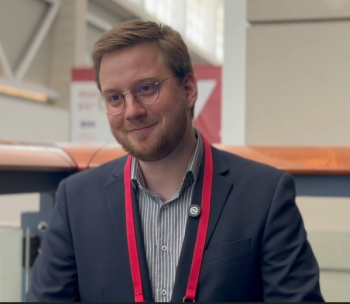
Sandforth emphasized the important of achieving prediabetes remission for preventing T2D as seen in his new research.

Philis-Tsimikas shared the latest findings demonstrating inferiority after switching from daily basal insulin to weekly insulin efsitora.