
This interview in the latest issue of The Respiratory Report features Divay Chandra, MD, MSc, discussing lithium's potential enhancement of alveolar repair after injury.
This interview in the latest issue of The Respiratory Report features Divay Chandra, MD, MSc, discussing lithium's potential enhancement of alveolar repair after injury.
This interview in the latest issue of The Respiratory Report features William Zhang, MD, discussing AM iron accumulation, which may contribute to the well-known phenomenon of AM dysfunction in COPD6.
This interview in the latest issue of The Respiratory Report features Peter Miller, MD, PhD, discussing the potential role of CH in developing COPD.
Radhakrishnan describes a unique initiative in Pittsburgh promoting health equity and closing the gap in cardiovascular health disparities.
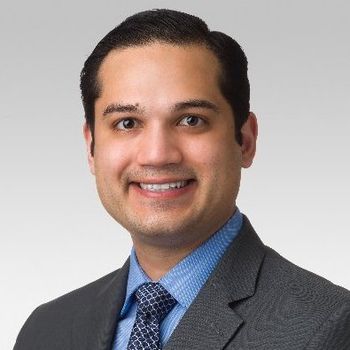
Revolutionizing Atopic Dermatitis 2025 Annual Meeting cochair Raj Chovatiya, MD, PhD, previews the upcoming meeting.
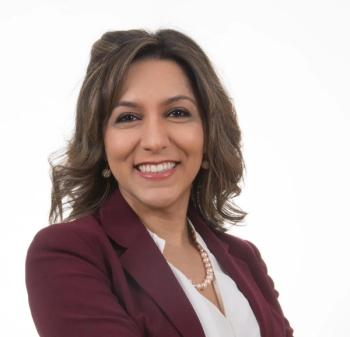
Mona Shahriari, MD, previews the upcoming Revolutionizing Atopic Dermatitis Annual Meeting being held in Nashville, TN from June 06-07.

A pair of experts discuss unmet needs and educational gaps related to atopic dermatitis.
Counting down the most impactful news at major medical meetings, it’s the HCPLive Five! This episode focuses on 5 key internal medicine updates from the 2025 American College of Physicians (ACP) IM meeting.
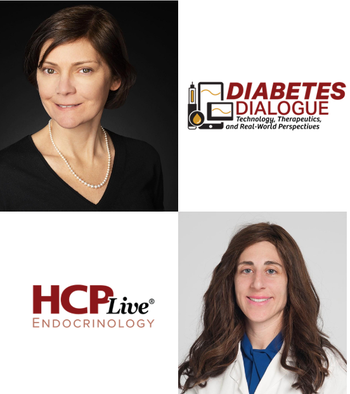
In this episode, experts discuss practical guidance for screening for presymptomatic type 1 diabetes with Rifka Schulman-Rosenbaum, MD.
Bhatt discusses his expectations for the future of cardiology in 2025, including GLP-1-RAs and the push towards combination therapy.
This segment of the latest interview with Lawrence Eichenfield, MD, features a discussion about the ICONIC-LEAD study.
Erickson encouraged clinicians to get involved in advocacy for health policy issues they are passionate about.
In this interview, Lawrence Eichenfield, MD, speaks on his team’s recent research on icotrokinra for patients with moderate-to-severe plaque psoriasis.
HCPLive spoke with Kane about new phase 2 data showing that an oral benzamide provides a significant change from baseline in CGI-S scores for participants with acute schizophrenia.
Herzig discussed special considerations for treating pain in people with OUD.
Gelles discussed potential concerns with AI’s use in reducing administrative burden but stressed its promise.

Payal Kohli, MD, explores how evolving tools and strategies in lipid management are reshaping preventive cardiology.
Erickson discussed how federal travel restrictions put critical patient care and workforce stability at risk.
Ruff discusses his expectations for cardiology for the rest of 2025, including new research into GLP-1 receptor agonists.
Le discusses his anticipation for the results of upcoming cardiology trials in 2025, including HORIZON and Target-D.
Vega discussed recent efforts in the public health field and his own center that have helped to improve screening rates.
Tailor discusses the future of AI in ophthalmology and beyond, and some of the challenges it may bring.
Laine gave an overview of the ACP Internal Medicine’s Friday Plenary session and how it reflects top-of-mind topics for IM clinicians.
Herzig outlined a talk she gave at the ACP Internal Medicine 2025 meeting reviewing the latest data in acute inpatient pain management.
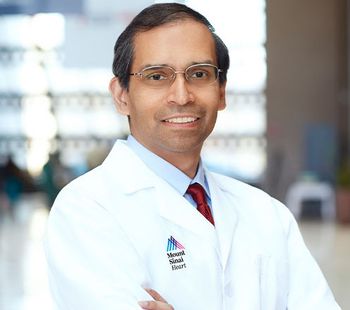
Deepak Bhatt, MD, MPH, MBA, explores high-impact trials from ACC.25, including REVERSE-IT, Alpaca, ADVANCE-HTN, SOUL, STRIDE, and DapaTAVI.
In this episode, hosts break down the STRIDE and SOUL trials presented at the American College of Cardiology 2025 Annual Scientific Sessions.
Gelles discussed AI tools that are becoming a part of clinician’s armamentariums and the impact they are having on the field.
Hoang discussed the CARD initiative started at Wayne State University in Detroit that she presented at the ACP IM 2025 meeting.
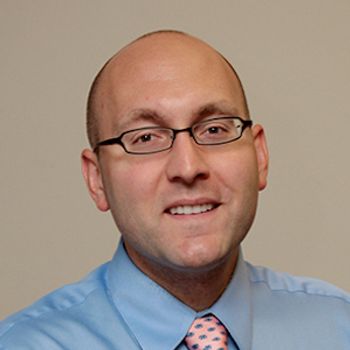
Peter Lio, MD, discusses the value of hyperfocused meetings such as RAD and what sessions he is most looking forward to at RAD 2025.
Goenawan discussed a meta-analysis he presented at the ACP Internal Medicine 2025 meeting.