

Winfrey discussed how noninvasive CRC screening tests can help meet gaps when patients face barriers to colonoscopy.
Winfrey discussed how noninvasive CRC screening tests can help meet gaps when patients face barriers to colonoscopy.
This episode of the SOCS podcast features an in-depth discussion between Crystal Aguh, MD, and John Harris, MD, PhD.
Erickson discussed key health policy issues the ACP is pushing back against during the organization’s Internal Medicine meeting.

Noor discussed the development of an AI model and app trained with a novel saturation strategy to help diagnose mpox.
Lam discussed a retrospective cohort analysis he presented at the 2025 ACP IM meeting and its findings.
Louis discussed the ASKmeGOC study and an electronic tool to help facilitate patient preference documentation.
While the final treatment decision is with the physician, AI may have a role in assisting decision making in virtual urgent care.
In a new analysis at ACC.25, abelacimab reduced bleeding rates across the risk spectrum, with more benefits for those at higher bleeding risk.
Poon discussed a community health needs survey and how the “model minority” myth can impact care for Asian Americans.
Blieden discusses long-term patient management in glaucoma, the importance of follow-up care, and the role of advocacy in ophthalmology.
Blieden describes recent advancements in the detection and treatment of narrow-angle glaucoma at TOA 2025.

Le examines the STRIDE, SOUL, and DapaTAVI trials presented at this year’s ACC Scientific Sessions.
Ahmad Masri, MD, MS, discusses how new options change the historic approach to the treatment of newly diagnosed ATTR-CM.

Daniel Judge, MD, discusses data from a prespecified analysis of ATTRibute-CM examining the effects of acoramidis with and without concomitant tafamidis use.
Ahmad Masri, MD, MS, discusses data detailing the effects of aficamten in oHCM from the FOREST-HCM OLE study at ACC.25.
Our Q1 2025 recap for endocrinology spotlights 5 regulatory updates, 5 key trial announcements, and top expert perspectives in diabetes care.

Vallerie Mclaughlin, MD, discusses the ZENITH trial and its historic effects of sotatercept on mortality, transplant risk, and more in PAH.
At ACC.25, Robert S. Rosenson, MD, discusses the efficacy and safety of solbinsiran, an ANGPTL3 inhibitor, in a population with mixed dyslipidemia.
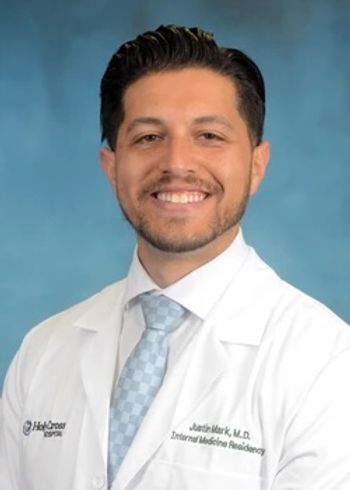
Justin Mark, MD, discusses an analysis of the FIGHT trial looking at racial and ethnic differences in heart failure outcomes.
Jose Lopez, MD, discusses findings and perspective into racial and ethnic differences in DbCM from the ARISE-HF trial.
Ragni discussed unique advantages fitusiran offers over other approved therapies for hemophilia A or B.
Steve Nissen, MD, discusses the phase 2 ALPACA trial and how it informs the potential of lepodisiran for lowering Lp(a).
Bhatt examines the potential reversal of the antiplatelet effects of ticagrelor with bentracimab in the REVERSE-IT trial.
In this video, the last in a 4-part series, panelists discuss how ongoing research and efforts could shape the future of ATTR-CM management.
In this video, part 3 of a 4-part series, panelists discuss the impact of recent approvals and pipeline developments on the outlook for ATTR-CM management.
In this video, part 2 of a 4-part series, panelists discuss on recent advancements in imaging and biomarker-based diagnostics for ATTR-CM
In this video, part 1 of a 4-part series, panelists discuss recent advancements in ATTR-CM management.
Sidonio discussed how fitusiran may improve the treatment landscape and reduce treatment burden for people with hemophilia A or B with or without inhibitors.

Khandelwal discusses advancements in intraocular lens (IOL) categories and the patient's role in choosing more innovative options.
Khandelwal shares insight and key takeaways for the optimization of intraocular lens selection in practice.