

This AAD 2025 interview with Bhutani covers some of the takeaways from her presentation on use of JAK inhibitors for alopecia areata among pregnant or breastfeeding women.
This AAD 2025 interview with Bhutani covers some of the takeaways from her presentation on use of JAK inhibitors for alopecia areata among pregnant or breastfeeding women.
In this interview at AAD 2025, Bhutani highlights several points of consideration for clinicians treating patients who are pregnant and suffering from alopecia areata.

This interview at the Skin of Color Society (SOCS) Scientific Symposium features Elbuluk describing her plans as newly-elected president of SOCS.
Crystal Aguh, MD, discusses a study from AAD 2025 examining HbA1c levels and outcomes in CCCA.

This interview with Chovatiya highlights his portion of the ‘Skin of Color’ talk at the American Academy of Dermatology conference.
This interview with Snyder features a discussion on recent findings on remibrutinib among patients with chronic spontaneous urticaria, also known as CSU.

Robert Bissonnette, MD, discusses data from the ICONIC-LEAD trial and the potential role of icotrokinra in plaque psoriasis.

In this interview at AAD 2025, Craiglow speaks on her team’s late-breaking findings on baricitinib among adolescents with severe alopecia areata.

Stein Gold highlights her team's findings on tapinarof cream (Vtama) 1% from the 48-week ADORING 3 extension for those aged 2 to 17 with atopic dermatitis.
This AAD 2025 interview features a discussion with Sonja Ständer, MD, new phase 3 findings from OLYMPIA 1 and 2 on nemolizumab in patients with prurigo nodularis.

In this segment of Silverberg’s interview, she highlights providing anticipatory guidance for parents of children with molluscum as well as treatment options.

HCPLive spoke with Anagnostou at AAAAI on how to determine what food allergy treatment patients should undergo.

Chambliss and colleagues found a 1% increase in asthma-related emergency department visits per unit of distance to semiconductor fabrication plants.

At AAAAI, Golden discussed when to test for insect sting allergies, the role of venom immunotherapy, and the potential impact of epinephrine nasal spray.
In this interview at AAD 2025, Silverberg discusses important facts for dermatologists to know in the management of molluscum contagiosum.
At AAAAI 2025, David Golden, MD, discussed when to test for insect sting allergies, the role of mast cell disorders, and updated guidelines for all ages.

Eapen discussed her research into analyzing the cord blood methylome for markers that predict atopic dermatitis risk at the AAAAI/WAO Joint Congress.

In this interview, Aguh answers several key questions about the efforts of the Skin of Color Society and improving diversity in clinical research.
In part 2 of this episode of Crisis Point, 3 nephrology experts and a patient advocate discuss strategies to address the CKD crisis.
HCPLive spoke with Golden at AAAAI on the pitfalls of diagnosing all patients with insect stings for insect sting allergies.

Casale discussed data from the phase 3 LIBERTY-CSU CUPID studies evaluating dupilumab’s use in urticaria.
Greiwe discussed findings from the phase 3 ADORING 1 and 2 trials in people as young as 2 years of age.

Veeral Sheth, MD, is joined by the CEO of Oculis to discuss the company's ophthalmic pipeline, including OCS-01 for DME and OCS-05 for acute optic neuritis.
Casale discussed data from the phase 1b/2a BEACON study he presented at the AAAAI/WAO Joint Congress.
This summary, featuring 4 leading experts, provides an overview of what dermatologists may look forward to during the AAD 2025 Annual Meeting.
Anouti discusses the new AAP biliary atresia guidance and what it means to him as a patient-advocate who had biliary atresia as an infant.

Pongdee discussed research presented at the AAAAI/WAO Joint Congress that focused on improving diagnosis of indolent systemic mastocytosis.
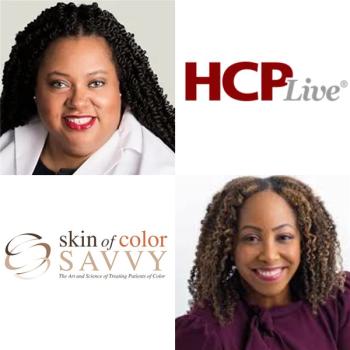
In this episode, Victoria Barbosa, MD, MPH, MBA, and Janiene Luke, MD, highlight insights and misconceptions about alopecia.

John Barbieri, MD, MBA, discusses recent data examining factors associated with formation of benzene in OTC benzoyl peroxide products.

Metz shared highlights from 2 presentations he gave on barzolvolimab’s efficacy at the AAAAI/WAO Joint Congress.