






Type 2 Diabetes
Latest News
Advertisement
Latest Videos





Podcasts

CME Content




























































Advertisement
More News

Real-world evidence suggests the rapid reduction of HbA1c is not associated with early worsening in subjects with T2D with mild or moderate nonproliferative DR.

With the popularity of the class skyrocketing, the American Society of Anesthesiologists has released new guidance urging patients to withhold GLP-1 receptor agonist use prior to elective surgeries or procedures based on potential risk of regurgitation and aspiration associated with delayed gastric emptying.

Study Finds Prescribing Fruits and Vegetables Could Reduce Future Healthcare Spending by $40 Billion
A microsimulation model leveraging data from NHANES suggests monthly prescriptions of fruits and vegetables to people with diabetes and food insecurity could prevent nearly 300,000 cardiovascular disease events over a 25-year period.

Crisis Point returns with an episode on cardiometabolic health disparities, as 3 experts unravel the scope of the crisis, from its historical basis to ongoing social determinants of health in the modern age.

After a whirlwind conference packed with special episodes and late-breaking data, hosts Diana Isaacs, PharmD, and Natalie Bellini, DNP, sit down to discuss their top takeaways from ADA 2023.

Announced by Tandem Diabetes Care on July 11, 2023, the Tandem Mobi insulin pump is billed as the world's smallest insulin pump, at less than half the size of the t:slim X2 pump and able to fit in a coin pocket.

Hosts are joined by Gary Scheiner, MS, of Integrated Diabetes Services, to discuss the latest developments in diabetes technology from the floor of the 83rd Scientific Sessions of the American Diabetes Association.

Expansions in access by the Centers of Medicare and Medicaid Services could bring the latest advances in continuous glucose monitoring into the hands of millions with diabetes, which could provide significant, population-level impact and bring the field a step closer to equitable diabetes management.
Our endocrinology month in review for June 2023, highlights FDA decisions in type 1 and type 2 diabetes, studies from ENDO 2023, and new data presented at the 83rd Scientific Sessions of the American Diabetes Association.

David Ahn, MD, joins our hosts for a discussion on overcoming barriers with diabetes technology and offers perspective on his experience leveraging social media platforms to disseminate information as a clinician.

Julie Heverly, of the Time in Range Coalition, discusses the history of time in range, offers perspective on its utility as a glucose metric, and provides an overview of the efforts of the Time in Range Coalition to advance use and education around time in range.

However, the presence of diabetic retinopathy was observed to have no significant impact on physical health and quality of life compared to subjects without retinopathy.
A recap of the top news from the 83rd Scientific Sessions of the American Diabetes Association, including data related to retatrutide, tirzepatide, oral semaglutide, and more!

After adjusting for potential confounding factors, patients with microvascular diseases, particularly diabetic retinopathy, and diabetic kidney disease, were found to have a greater possibility of left ventricular hypertrophy.
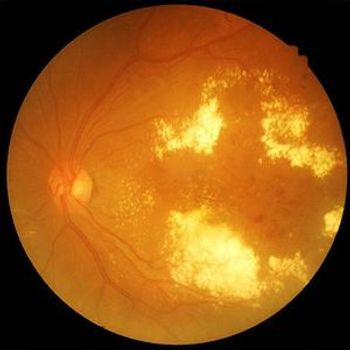
Diabetic retinopathy and microalbuminuria were associated with a significantly higher risk of hemodialysis induction in individuals with T2D.

An analysis of 3 academic health centers suggests youth with diabetic retinopathy had a longer duration of diabetes and higher hemoglobin A1c at the time of the diabetic eye exam.

Juan Frias, MD, discusses the potential impact of an FDA approval for once-weekly insulin icodec based on data observed within the ONWARDS program.

At ADA 2023, we asked interview guests for their opinions on the most important news to come from this year's scientific sessions, including Juan Frias, MD, Bob Gabbay, MD, PhD, Yehuda Handelsman, MD, Viral Shah, MD, and more.

A new analysis presented at ADA 2023 recommended effective diabetic retinopathy screening for patients with T2D and hypertension.
Investigators from the TRANSITION-T2D study join Diabetes Dialogue to discuss the study and implications for care.

A direct comparison of 3 independent AI systems showed differing prevalences of diabetic retinopathy, suggesting inconsistencies when applying these tools to those without preexisting diabetes.

The analysis, from ADA 2023, additionally indicated SGLT2 inhibition showed no effect on the risk of requiring intravitreal injection treatment for DME.

Data from a phase 2 substudy of retatrutide indicates use could reduce liver fat content and contribute to resolution of NAFLD in people with NAFLD and obesity.

W. Timothy Garvey, MD, sits down to discuss the results of SURMOUNT-2, the ongoing revolution of antiobesity medications, and why he is concerned over the growing prevalence of online weight loss clinics

Use of metformin was associated with significant reductions in the risk of developing POAG beyond glycemic control, according to an analysis presented at ADA 2023.
Advertisement
Advertisement
Trending on HCPLive
1
Half-Life vs. Real Life: How Real-World Evidence Is Reframing Wet AMD Treatment
2
FDA Grants Priority Review for Insmed's ARIKAYCE sNDA for MAC Lung Disease
3
When Innovation Builds Clinical Confidence: Evaluating Treatment Options in Hemophilia A
4
The HCPFive: Top News for Healthcare Providers from the Week of 09/13
5