

Eleonora Lad, MD, PhD, presented results of a post-hoc analysis evaluating the impact of baseline characteristics on lesion progression in patients receiving APL-2 for geographic atrophy at ASRS 2019.
Eleonora Lad, MD, PhD, presented results of a post-hoc analysis evaluating the impact of baseline characteristics on lesion progression in patients receiving APL-2 for geographic atrophy at ASRS 2019.
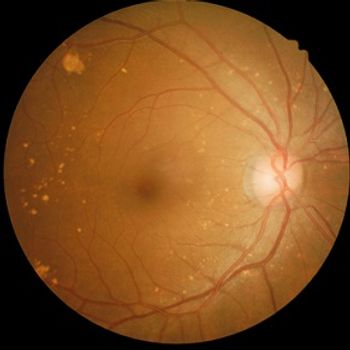
Carl Regillo, MD, of Wills Eye, and Michael Stewart, of the Mayo Clinic, discuss changes they would like to see in their speciality at ASRS 2019.

W. Lloyd Clark, MD, of Palmetto Retina Center, discusses clinical implications of the 52-week PANORAMA results, which found treatment with intravitreal aflibercept injections could reverse disease progression in patients with moderately severe to severe NPDR.
Jeffrey Heier, MD, presented 24-month results of the PRO-CON study, which found no statistical difference in conversion rates in fellow eyes regardless of prophylactic treatment with aflibercept injections, at ASRS 2019.

Early treatment and completing treatments key to visual acuity improvements in neovasculare age-related macular degeneration.

Ajay Kuriyan, MD, discusses what he warns patients to be aware of when seeking out treatment from stem cell therapies and why he believes other physicians should as well.

LADDER study results presented at ASRS revealed efficacy of the PDS was equal to that of monthly ranibizumab.

An oral therapy for aged-related macular degeneration could be on the horizon after displaying efficacy in a recent phase 2 study.

Carl Regillo, MD, who presented 96-week data of brolucizumab at ASRS 2019, discusses how brolucizumab could impact care of wAMD in a real-world setting.

More patients undergoing long-term use anti-VEGF therapy saw improvements in visual acuity than saw declines after 10 years.
Investigators from Wills Eye and Retina Consultants of Austin presented 96-week data from the HAWK and HARRIER trials at ASRS 2019.

Peter Kaiser, MD, presented data from a phase 2 trial examining the safety and efficacy of risuteganib at ASRS 2019.
W. Lloyd Clark, MD, discusses the approaches he uses in his clinical practice to reduce patient noncompliance — specifically, when treating diabetic macular edema.
As physician burnout becomes a more common issue, physician across an array of fields find themselves discussing and formulating ways to circumvent burnout.

Physician from Palmetto Retina Center on deciding between aflibercept, ranibizumab, and avastin for treatment of DME.

Here's a primer for new data and discussions MD Mag will be covering this weekend in Chicago.

Kodiak's KSI-301 was shown to have sustained benefit and safety in a phase 1a study involving patients with severe DME.

How come treat-and-extend may not be the most ideal therapy regimen for retina disease, and how biologics change physicians' perspective on dosing.

Are anti-VEGF and PRP therapies the best-case scenario for patients with AMD, or will gene therapies reach the market in the near future?

How the three-year results of a gene therapy for inherited retinal disease may redefine its potential in ophthalmology.

Patients who were treated with CLS-TA were able to achieve ≥3 lines of visual acuity 47% of the time, compared to 15% of the patients who received sham treatment.

Those who were switched to aflibercept improved 9 letters of VA, and 110 µm in CST from months 6 to 12.

After 6 months, 80% of those implanted with the 100 mg/mL dose of ranibizumab still did not need a medication refill.

A comparison of patients with either anterior segment neovascularization without glaucoma or neovascular glaucoma found the benefits of anti-VEGF and PRP are heavily influenced by the presence of glaucoma.
A three-year update of VN for patients with biallelic RPE65 mutation-associated inherited retinal disease improved on the common standard-of-care for retina disease.

Results from the PACORES group clinical trial debunked previously-held beliefs that IVB is unsafe for patients with proliferative diabetic retinopathy undergoing the procedure.
Why substantial evidence is lacking to indicate either therapy method's preference for the treatment of neovascularization.

The use of a single drop of nepafenac 0.3% suspension has shown in a trial to be an effective pain reducer post-intravitreal injection at both 6-hour and 24-hour points.
The cheaper intravitreal anti-VEGF options improved visual acuity in the eyes of patients with 5 different retinal conditions.

Amy S. Babicuh, MD, noted that “while DRIL is not the biomarker, it is certainly useful in conjunction with other information, and should prompt continued treatment with anti-VEGF agents when it is present.”