

Data show Black individuals had a 1.41 times higher odds of having type 2 diabetic retinopathy when compared to white individuals.
Data show Black individuals had a 1.41 times higher odds of having type 2 diabetic retinopathy when compared to white individuals.

The approval expands the indication for Qelbree to all patients with ADHD aged 6 years and older, and provides adult patients their first novel non-stimulant option in 20 years.

Investigators suggested future research was needed to identify elements of learning environments that contribute to burnout among sexual minority students.

The most common diagnoses were found to be non-malignant, including upper gastrointestinal problems in men and urinary tract infections in women.

A study shows the Visceral Sensitivity Index could help identify anxiety and health-related quality of life burden in patients with IBS or IBD.

These signatures were also related to unfavorable stress responses related to gastrointestinal symptoms.

The new guidance restructures how study designers should look at trial population, efficacy benchmarks, and safety in clinical trials involving drug development.
The azole antifungal treatment was approved by the FDA to reduce the incidence of recurrent vulvovaginal candidiasis, or chronic yeast infection.

Vitamin D supplementation also resulted in improvements in quality of life scores for patients with irritable bowel syndrome.

Propolis is a resinous give product collected by honeybees from varied petals and plant buds sources.

A combination of first-line management consisting of validation, explanation, and a positive diagnosis, non-pharmacological treatments, and pharmacological treatment should be considered for pediatric patients with IBS or functional abdominal pain disorders.

The completion of this study concluded the planned clinical development program for nasal nalmefene and the company expects to file a New Drug Application in the second half of 2022.

Future epidemiologic studies may be necessary to investigate further using perinatal data and controlling for other variables.

Investigators suggested that the practice of insurance redlining could be manifesting itself via ACA health exchanges.
Participants with obesity or overweight lost up to 22.5% of their body weight with tirzepatide treatment.
Dr. McKinley-Grant details the new health movement that aims to stop the cycle of suffering for people of color living with psoriatic disease.

This episode features a conversation with Dr. Amelle Shillington and Jacob and Ashley Wiley after Shillington diagnosed the extremely rare genetic disease that's afflicted Aislynn Wiley, and only 69 other documented cases worldwide.

Tirzepatide met both coprimary endpoints in SURMOUNT-1, with use contributing to reductions in body weight of up to 22.5% during the 72-week trial and more than 60% of those receiving the 15 mg dose achieving body weight reductions of 20% or more.
In the April 2022 edition of Diabetes Dialogue: Therapeutics, Technology, and Real-World Perspectives, hosts Drs. Diana Isaacs and Natalie Bellini discuss the implications of the FDA's approval of semaglutide 2.0 mg, the use of novel glycemic control metrics, and a preview of ATTD 2022.

Antibiotic and proton pump inhibitor use was also associated with an increased risk of C difficile infection.
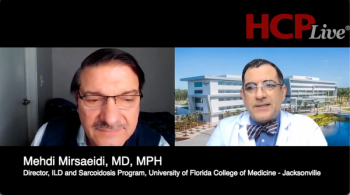

Nancy Holekamp, MD discusses the substantial emotional burden and impact on independence of GA reported in the Geographic Atrophy Insights Survey.

However, comorbidity risk was believed to be substantially different between the two diseases.

The absolute reduction in LFC at week 52 was significantly greater for the pooled tirzepatide 10 mg and 15 mg groups versus the insulin degludec group.

Dr. Simonetto is involved in several studies using artificial intelligence.

Pediatric patients with CDI had a higher number of previous-day hospital admissions, hospitalizations, and total hospital admissions.

Participants assigned to once-weekly tirzepatide spent significantly more time in tight target range at 52 weeks compared with those assigned to insulin degludec.

71.6% of patients showed a clinically meaningful improvement in total corneal fluorescein staining at 4 weeks after using the ophthalmic solution.

The investigators will now move forward testing the 150 mg dosage of the treatment in a phase 3 trial.