


























































The celebrity chef-turned-producer wants to champion healthcare access, both on the screen and in person. Where does he start?
The celebrity chef-turned-producer wants to champion healthcare access, both on the screen and in person. Where does he start?

This combination of telmisartan, amlodipine, and chlorthalidone reduced blood pressure to target levels in 69.5% of patients at 6 months, compared to 55.3% of patients receiving usual care.

For patients with acute coronary syndrome and depression, taking escitalopram to treat depression resulted in significantly fewer major cardiac events compared to patients given placebo.

Women and men are more likely to survive when treated by female doctors compared to male doctors, but the difference in heart attack survival is greater for women.

Researchers were able to rule out myocardial infarction in 30% of patients immediately, and another 25% of patients at 1 hour. By 3 hours, the assay had successfully ruled out MI in 83.8% of patients, versus the 80.4% ruled out under the conventional assay.

Research suggests that elevated glycemia, low blood pressure, and low BMI may be identifying markers for dementia risk and possible targets for management or prevention.
The optimal duration of dual antiplatelet therapy remains unclear, despite being proven efficacious for roughly 2 decades.

Patients in the intensive blood pressure treatment group had a 19% lower risk of developing mild cognitive impairment compared to those given standard treatment, according to the SPRINT MIND study.
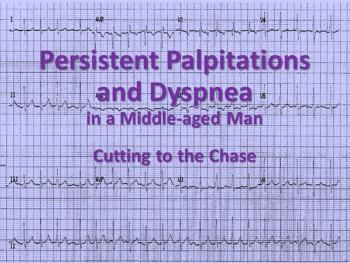
Patient history includes right heart failure due to sinus venosus defect with anomalous right pulmonary venous return; surgical repair performed ca 2006.

Does caffeine increase or decrease the risk of new onset AF? Find out with our T/F quiz on results of a new meta-analysis.

The PocketECG Cardiac Rehabilitation System provides electrocardiography (ECG) monitoring and alerts during cardiac rehabilitation.

Phase 2a clinical trial commences for repurposed drug, SOM3355, for the treatment of Huntington’s disease.

A review of literature on depression and anxiety in patients with heart failure reports that 21.5% have depressive symptoms and 19% meet the criteria for a depressive disorder—2 to 3 times higher than rates in the general population.

The paradigm of obesity is complex and requires a multi-disciplinary approach, but it is one of the most gratifying experiences for both the physicians and patient when they see the results of weight loss.

Results showed that participants with doctor-diagnosed asthma had a 38% increased risk of developing AF compared to those without asthma.
Certain lots of the therapy, distributed under the Actavis label in the US, have been detected to have trace amounts of probably human carcinogen NDMA.
The Surpass Streamline stent is approved to treat unruptured large and giant wide-neck intracranial aneurysms.
Abbott’s updated MitraClip is a catheter-bases system that provides an alternative to open heart surgery for repairing mitral regurgitation.

A few months after performing a first-of-its-kind procedure in the US, members of the John Ochsner Heart and Vascular Institute surgical team explore what led to the surgical success.

The Cleveland Clinic’s pioneer of minority programs plans to end health disparity.

Pulmonary arterial hypertension is a rare, but deadly complication of systemic lupus erythematosus. French investigators sought to identify clinical features of patients with both.

A study in the VA system found that only 19% of patients diagnosed with pulmonary hypertension received a PDE5 inhibitor prescription consistent with clinical guidelines.
The HVAD system is the only approved LVAD approved for implant via thoracotomy or median sternotomy.

AF is associated with major disease burden, predominately in the form of cardiovascular comorbidities. As a direct oral anti-coagulant, rivaroxaban has been a proven inhibitor of ischemic stroke risks in patients with AF.

The inverse association between coffee-drinking and all-cause mortality held even for participants with genetic variations affecting caffeine metabolism.