





Cardiology
Latest News
Advertisement
Latest Videos





CME Content






















































Advertisement
More News
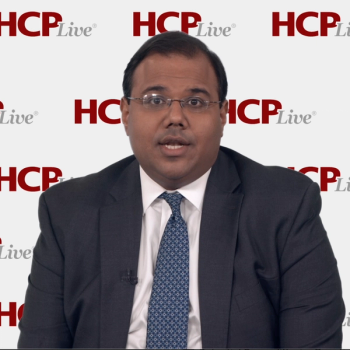
A Q&A with Nihar Desai, MD, on the PROMPT-Lipid trial and the potential of advancing technology for improving patient care in pragmatic ways.

Benjamin Scirica, MD, discusses the importance of team-based care and leveraging technology to optimize the management of cardiovascular risk factors.

HCPLive spoke to Johnson on how strategies for addressing patient misconceptions about cholesterol management.
Nihar Desai, MD, discusses the results of the PROMPT-Lipid trial while on-site at the 2024 Family Heart Global Summit.
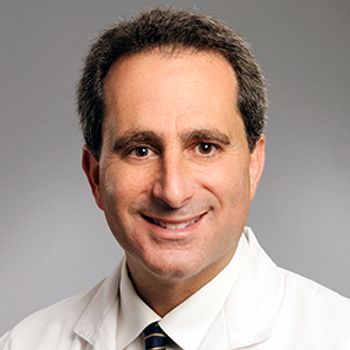
Laurence Sperling, MD, discusses his presentation from the 2024 Family Heart Global Summit examining public health efforts for prevention of cardiovascular disease.

At the Family Heart Summit, Nihar Desai, MD, discussed using EMR alerts to improve lipid therapy for high-risk ASCVD, as shown in the PROMPT-Lipid trial.

The analysis of LDL-C Management Trends observed disparities in LDL-C goal attainment by race, gender, and age.

As advancements in valvular technology progress, Nguyen highlights the need for long-term data and multidisciplinary collaboration to improve patient outcomes.

EDG-7500 was well-tolerated in healthy patients in Phase 1 while achieving gradient relief without LVEF reductions in the Phase 2 CIRRUS-HCM trial.

A new study revealed those who consume a moderate amount of coffee or caffeine had a 48.1% and 40.7% reduced risk for developing cardiometabolic multimorbidity.

Counting down the most impactful news at major medical meetings, it’s the HCPLive Five! This episode focuses on 5 key updates from the European Society of Cardiology (ESC) Congress 2024.

In this edition of the APAC Recap, Erin Pardee, PA-C, discusses the American Society of Preventive Cardiology 2024 Congress on CVD Prevention with Viet Le, DMSc, PA-C.

The agency's designation was granted to plozasiran as an adjunct to diet to reduce triglycerides in adults with familial chylomicronemia syndrome.
The APAC Recap is a new multimedia series created through a partnership between APAC and HCPLive where members of the Academy of Physician Associates have peer-to-peer discussions centered around recent scientific congresses and meetings.

Lifetime statin treatment increased quality-of-life-adjusted survival in men and women aged ≥70 years with and without previous CVD in the United Kingdom.

Deepak Bhatt, MD, MPH, MBA, discusses the results of a prespecified analysis of the EMPACT-MI trial examining the effect across the spectrum of baseline kidney function.

New study finds ASCVD risk score often misses at-risk patients for first acute coronary syndrome, highlighting need for better prediction methods.
The August 2024 cardiology month in review highlights critical data from the European Society of Cardiology Congress 24 and the latest updates on finerenone.
Deepak Bhatt, MD, MPH, MBA, discusses a group of 4 high-impact studies from ESC Congress 2024: FINEARTS-HF, ABYSS, RESHAPE-HF2, and SHAM-PVI.

Ahmad Masri, MD, MS, highlights a trio of studies from ESC Congress 2024 examining use of aficamten in hypertrophic cardiomyopathy.
Ahmad Masri, MD, MS, discusses the results of a SEQUOIA-HCM substudy leveraging cardiac magnetic resonance to assess structural changes associated with aficamten use in HCM.
Ahmad Masri, MD, MS, discusses an integrated safety analysis of aficamten using data from 3 clinical trials.

Siddharth Patel, MD, MPH, discusses how an AZALEA-TIMI 71 analysis presented at ESC Congress 2024.
EMPACT-MI study shows empagliflozin is safe post-acute MI and reduces heart failure events, with kidney protection across kidney function levels.

In this episode, Muthiah Vadugnathan, MD, MPH, and Stephen Greene, MD, discuss finerenone and MRA data from ESC Congress 2024.
Advertisement
Advertisement
Trending on HCPLive
1
eGFR Underestimates CKD in Patients with Cancer, Study Finds
2
Tegoprubart Improves Quality of Life vs Tacrolimus After Kidney Transplant
3
42% on Povetacicept Reach KDIGO-Aligned UPCR Target in RAINIER
4
The HCPFive: Top News for Healthcare Providers from the Week of 10/18
5