






Dyslipidemia
Latest News
Advertisement
Latest Videos





CME Content






















































Advertisement
More News

Data from the REMAP-CAP trial suggests use of aspirin or P2Y12 inhibitors had a low likelihood of improving organ support-free days in critically ill patients with COVID-19 within 21 days compared to no antiplatelet therapy.

A favorable lifestyle is associated with a lower risk of coronary artery disease in carriers and noncarriers of FH variants.

Results of the meta-analysis indicate the absolute risk reductions seen with statin therapy were notably lower than the relative risk reductions achieved with statin therapy.

An analysis of data from a prospective stroke registry suggests presence of hypertriglyceridemia was associated with a more than 2-fold increase in risk of MACE among patients with a history of acute stroke or TIA, even with adjustment for baseline LDL-C and statin use.

A new study suggests use of apixaban was associated with a lower rate of rehospitalization for VTE compared with warfarin in patients with VTE requiring extended anticoagulation.

Data show the absolute risk reductions of treatment with statins in terms of all-cause mortality, myocardial infarction, and stroke are modest compared with the relative risk reductions.

Nihar Desai, MD, MPH: Improving PCSK9 Inhibitor Use, Guiding Heart Failure Care & ACC 2022 Headlines
The Yale Associate Chief of Cardiovascular Medicine discusses improved use of available drug classes, as well as the potential approval for omecamtiv mecarbil.
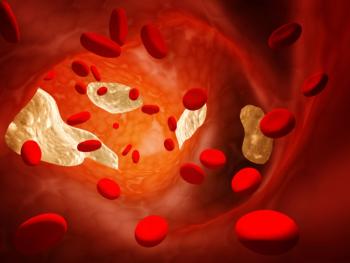
A meta-analysis of data from more than 4 million patients suggests the prevalence of statin therapy may be overdiagnosed and provides insight into risk factors associated with increased risk of intolerance.

Findings from REDUCE-IT show icosapent ethyl was projected to be cost-effective compared with standard care in patients with high CV risk despite statin therapy.

A new study in JAMA Network Open provides an overview of the cost-effectiveness of icosapent ethyl at multiple prices in high-risk patients with hypertriglyceridemia despite statin therapy.

Data show atherosclerotic burden was heterogeneous across LDL-C levels and risk is shown to be consistently associated with plaque burden.

An international, retrospective analysis presented at ISC 2022 provides evidence suggesting use of DOACs as a treatment for cerebral venous thrombosis was associated with similar risk of recurrent clots and death as warfarin, but a 65% lower risk of major bleeding.

No difference was observed between atrial shunt placement and sham in the endpoint of CVD death, non-fatal ischemic stroke at 12 months, and rate of total heart failure events at 24 months.

Analysis of real-world registry data presented at ISC 2022 provide insight into the risk of intracranial hemorrhage with tenecteplase versus alteplase in patients with acute ischemic stroke.

Data from an analysis of the ALSPAC cohort suggests arterial stiffness in adolescence could cause insulin resistance and dyslipidemia in young adulthood.

Data show among patients with focal FDG uptake, PET/MRI and inflammatory blood markers resolved at follow-up performed at a mean of 52 days after baseline.

Data show the 1-year incidence of the composite primary endpoint was 10.6% among patients randomized to FFR-guided PCI and 6.9% in CABG.

Sexual activity was involved in 0.2% of all SCDs, with sudden arrhythmic death syndrome and cardiomyopathies predominant underlying causes.

Abbott's device is designed to create highly detailed 3-dimensional maps of the heart to help physicians identify and treat abnormal rhythms.

Data show Black and White patients had a similar risk of MACE over a median 24.4-month follow-up.

From the pooled results of TRILOGY 1 and 2, data show 4 g/d of ω-3–PL/FFA reduced TG levels by 10.9% at 12 weeks and 12.7% at 26 weeks, relative to placebo.
Announced on December 22, the approval of inclisiran (Leqvio) comes nearly a year after the original PDUFA date. With approval, inclisiran becomes the first and only siRNA therapy approved to lower LDL-C with twice-yearly dosing.
Announced on Dec. 20, the latest approvals for rivaroxaban (Xarelto) mark the 10th and 11th indications for the factor Xa inhibitor in the US.
Cardiologists have utilized new technologies during the COVID-19 pandemic.

Data from an analysis of 67k older Danes suggests statin discontinuation corresponded with 1 excess event per 112 persons per year in a primary prevention cohort and 1 excess event per 77 persons per year in a secondary prevention cohort.
Advertisement
Advertisement
Trending on HCPLive
1
eGFR Underestimates CKD in Patients with Cancer, Study Finds
2
The HCPFive: Top News for Healthcare Providers from the Week of 10/18
3
42% on Povetacicept Reach KDIGO-Aligned UPCR Target in RAINIER
4
Tegoprubart Improves Quality of Life vs Tacrolimus After Kidney Transplant
5