
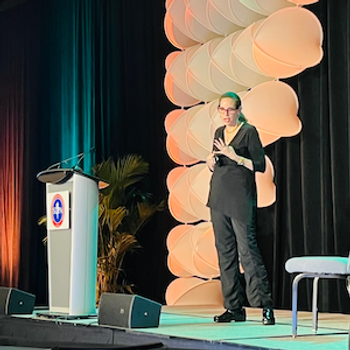
During her SDPA 2022 presentation, Cynthia Trickett explored the topic of psoriasis, including comorbidities and treatment options.
During her SDPA 2022 presentation, Cynthia Trickett explored the topic of psoriasis, including comorbidities and treatment options.

Therapeutic candidate Sparsentan could expand treatment options for 2 rare kidney diseases. Dr. Jula Inrig expands on the potential for the FSGs patient population.

New data from ECZTRA 1 and 2 show patients unable to achieve complete skin clearance nonetheless benefitted in at least 1 component of disease improvement.

For safety, 24.1% of the entire study population experienced adverse events, with 18 participants developing tuberculosis.
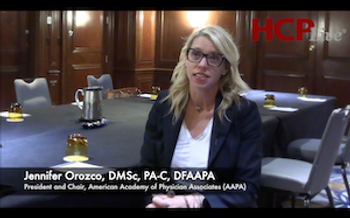
An interview on several major highlights from Dr. Orozsco’s presentation about the greater visibility and importance of physician associates at SDPA 2022.
An interview with Dr. Orozco regarding her presentation at SDPA 2022 on the topic of physician associates and their value in the modern medical system.

Serious forms of cardiovascular diseases were observed to be connected to a specific form of AMD with subretinal drusenoid deposits.

There was a similar prevalence of NAFLD in patients who were overweight as there was for individuals who were obese.
An SDPA 2022 interview with Dr. Robert Kirsner regarding his presentation regarding the topic of wound healing and related changes in the field.
In this special edition episode of Diabetes Dialogue: Technology, Therapeutics, & Real-World Perspectives, hosts Diana Isaacs, PharmD, and Natalie Bellini, DNP, break down what the approval of teplizumab means for type 1 diabetes. During the episode, hosts take a deep dive into type 1 diabetes staging and hypothesize around the role of CDCES in educating primary care and other specialties to optimize the potential of teplizumab.

On November 17, the US FDA announced the approval of teplizumab (Tzield), which is administered through IV infusion once daily for 14 consecutive days, for delaying the onset of stage 3 type 1 diabetes in adults and pediatric patients 8 years and older who currently have stage 2 type 1 diabetes.
An interview at the SDPA 2022 Conference on major talking points from Dr. Robert Kirsner’s presentation on wound care with dermatologists and physician associates.

The novel investigational complement C5 inhibitor is the only product for treatment of geographic atrophy to achieve two positive phase 3 pivotal trials with statistical significance.

The mean daily adherence was higher in the mDOT group compared to the patient navigation group.
An interview from SDPA 2022 regarding highlights from Dr. Robert Kirsner’s presentation on dermatologists and wound healing.

A study published in Diabetologia discovered that individuals who are exposed to high light pollution while they sleep show a greater risk of developing type 2 diabetes.

The apolipoprotein E ε2/ε3/ε4 variant was associated with a significant linearly increasing trend for risk of AMD from ε4 to ε3 to ε2.

Insulin glargline-aglr is the second approved interchangeable biosimilar insulin product to insulin glargine indicated to improve glycemic control in patients with diabetes mellitus.

The results show serum IgA-IgG immune complex levels decreased in both patients treated with atacicept 25 mg ab atacicept 75 mg over time.

Ardelyx was issued a Complete Response Letter in July requestion an additional trial.
Patients with psoriasis in high-impact areas may benefit from either of 2 available dosing regimens of the biologic.

Despite a Boxed Warning included in its 2017 FDA approval, the plaque psoriasis biologic was not linked to any causal cases of suicide attempts in 4-year, real-world data.
The pair of pulmonology and microbiology experts join the podcast to discuss what clinicians should look out for in indoor pollutant exposure risks, and how to manage their impact.

Dr. Jula Inrig explains the mechanism of action for the Dual Endothelin Angiotensin Receptor Antagonist (DEARA) investigational candidate Sparsentan, for rare kidney diseases.

The investigators found that depression increased the odds of systemic steroid administrations, the use of 2 or more molecular targeted drugs, and surgery in patients with ulcerative colitis.

Overall, 82 participants agreed to receive DBS testing, 28% of which reported that the aspects of the program made them feel uncomfortable.

A recent research letter highlighted the importance of diversity in the field of dermatology, citing the lack of diversity among trainees in the field.

Difluprednate treatment after AGV implantation resulted in a similar IOP and fewer glaucoma medications compared with prednisolone acetate.

New trial data presented at ACAAI 2022 suggest a potential insight into treating chronic spontaneous urticaria after a period of omalizumab treatment.
An online survey of adult patients shows a strong desire for a singular, consistent topical option.