

This interview features a discussion with Bhatia and Ferris regarding the necessity of collaboration between dermatologists and oncologists for skin cancer.
This interview features a discussion with Bhatia and Ferris regarding the necessity of collaboration between dermatologists and oncologists for skin cancer.
In this interview, Neal Bhatia, MD, and Laura Korb Ferris, MD, PhD, spoke on their Fall Clinical Conference talk titled ‘Beyond the Biopsy: Other Methods To Help Us Manage Skin Cancer.’
This interview with Bunick highlighted the LEVEL UP phase 3b/4 trial findings regarding upadacitinib treatment of patients with atopic dermatitis.

Neuen, Wadhwani, and Barratt discuss atacicept promise in IgA nephropathy based on phase 2b ORIGIN OLE results, at-home use, and the future of kidney disease care.

New ORIGIN trial data show atacicept may slow kidney decline in IgA nephropathy to rates seen with healthy aging, with notable reductions in Gd-IgA1 and UPCR.
Refardt discussed findings from the largest hyponatremia trial ever conducted, including 2174 participants across 9 European centers.

Richard Pratley, MD, discusses how FLOW mortality data informs the use of semaglutide in patients with chronic kidney disease and type 2 diabetes.
In this interview, Bunick spoke about the contents of his Fall Clinical Dermatology presentation specifically regarding mechanisms of action and safety of systemic therapies.
In this interview, Kwatra highlighted several key takeaways from his talks on prurigo nodularis, atopic dermatitis, and itch at the Fall Clinical Dermatology Conference.

Herrington shared the carryover effects observed in the post-trial follow-up of the phase 3 EMPA-KIDNEY trial.

Yee discussed how the data show a benefit in this hard-to-treat population, similarly to the heterogeneous FSGS group.
In this interview segment, Del Rosso highlighted his Fall Clinical presentation takeaways covered in the talk ‘What’s New in the Medicine Chest - Part 2.’
New FINEARTS-HF data shows that finerenone reduces albuminuria in patients with HFmrEF or HFpEF, but without significant eGFR changes.

At AAO 2024, Khurana discussed rapid visual and structural gains for uveitic macular edema with vamikibart, paving the way for Phase 3 trials.
At AAO 2024, Garg describes an analysis of the Phase 2/3 PHOTON trial evaluating the effect of DME treatment history on aflibercept 8 mg and 2 mg outcomes.
In the first part of his Fall Clinical presentation on new topical medications, Del Rosso discusses new therapies available for use among dermatologists.
In this interview with Chovatiya, he highlights some of the elements of the presentations being given at the Fall Clinical Dermatology conference in Las Vegas.
At AAO 2024, HO described meaningful BCVA improvements in patients with retinitis pigmentosa observed through 2 years of the Phase 2b/3 RESTORE trial.

At AAO 2024, Kay describes encouraging interim safety and efficacy results from the ATSN-201 gene therapy trial in patients with X-linked retinoschisis.
At AAO 2024, Khanani discussed data showing a 97% reduction in annualized injection needs at 9 months with RGX-314 gene therapy.
Jonathan Barratt, PhD, discusses his excitement surrounding data and programming at the American Society of Nephrology's Kidney Week 2024, with a focus on IgAN.
In the most recent Lungcast, Rachel Eddy, PhD, joined host Al Rizzo, MD, to speak to listeners about the current and future uses of AI in lung imaging.

At AAO 2024, Pearlman discusses how an innovative oral approach may provide an alternative pathway to existing treatments for DME.
At AAO 2024, Goldberg described pooled visual function data from 3 randomized, controlled clinical trials evaluating NT-501 for patients with MacTel.

At AAO 2024, Borkar discusses the visual acuity benefit of ONL1204 ophthalmic solution for patients with macula-off rhegmatogenous retinal detachment.

At AAO 2024, Do describes the durable vision gains and anatomic improvements achieved with aflibercept 8 mg for DME over 3 years of the PHOTON trial.
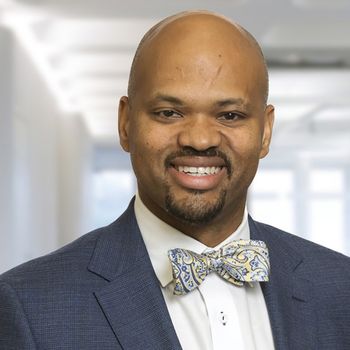
At AAO 2024, Cunningham describes the clinical response and safety of faricimab (Vabysmo) in underrepresented populations with diabetic macular edema.
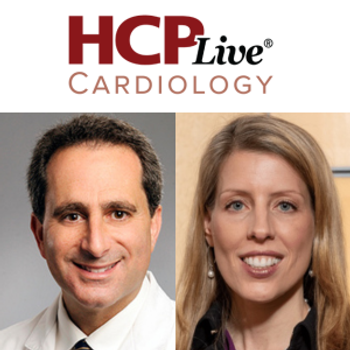
In part 3 of our Special Report on lipoprotein apheresis, Sperling and Gianos discuss future considerations for use and the evolving landscape of lipid management.
In part 2 of this 3-part series, Sperling and Gianos highlight the role of lipoprotein apheresis in contemporary settings and the supporting evidence base.
Laurence Sperling, MD, and Eugenia Gianos, MD, discuss the historical context and underutilization of lipoprotein apheresis in part 1 of a 3-part video series.