


Cardiology
Latest News
Advertisement
Latest Videos


CME Content





















































Advertisement
More News
Martha Gulati, MD, joins The Heart Team to share her professional experiences and recommendations in treating female-specific cardiovascular disease.
Martha Gulati, MD, joins episode 2 to discuss the burden of gender disparity in cardiovascular research, screening and care.

Data presented at HFSA 2022 examining aficamten provides insight into the effects of the agent on LVOT-G, NYHA class, and KCCQ-OSS among patients with hypertrophic cardiomyopathy from the open-label extension trial.

Martin Maron, MD, provides perspective on a recent study he led examining changes in rate of sudden cardiac death among patients with hypertrophic cardiomyopathy and reflects on the progress made within disease management.

In this special edition episode of Don’t Miss a Beat, which was filmed on-site at the HFSA 2022 annual scientific meeting, hosts Muthiah Vaduganathan, MD, MPH, codirector of Center for Cardiometabolic Implementation Science at Brigham and Women's Hospital, and Stephen Greene, MD, assistant professor of medicine at Duke University School of Medicine, take the audience on a deep dive into implementation science at the meeting, the potential for a polypill in heart failure, and other highlights from HFSA 2022.

Key opinion leaders in the cardiometabolic space describe the importance of the introduction of SGLT2 inhibitors for heart failure treatment based on 2022 guidelines.

A University of Michigan-led analysis of NHANES data provides insight into the increases in prevalence of food insecurity among patients with cardiovascular disease in the US across racial and ethnic groups.
NAFLD resulted in a number of other negative outcomes, including sleep disturbance, cardiovascular disease, significant hepatic fibrosis, and advanced hepatic fibrosis.
Research finds potential benefits to using apremilast for plaque psoriasis patients.

"Collectively, this work highlights and supports chronotype as a potential risk factor related to type 2 diabetes and cardiovascular disease risk," investigators wrote.
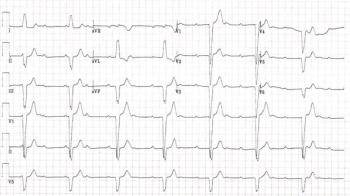
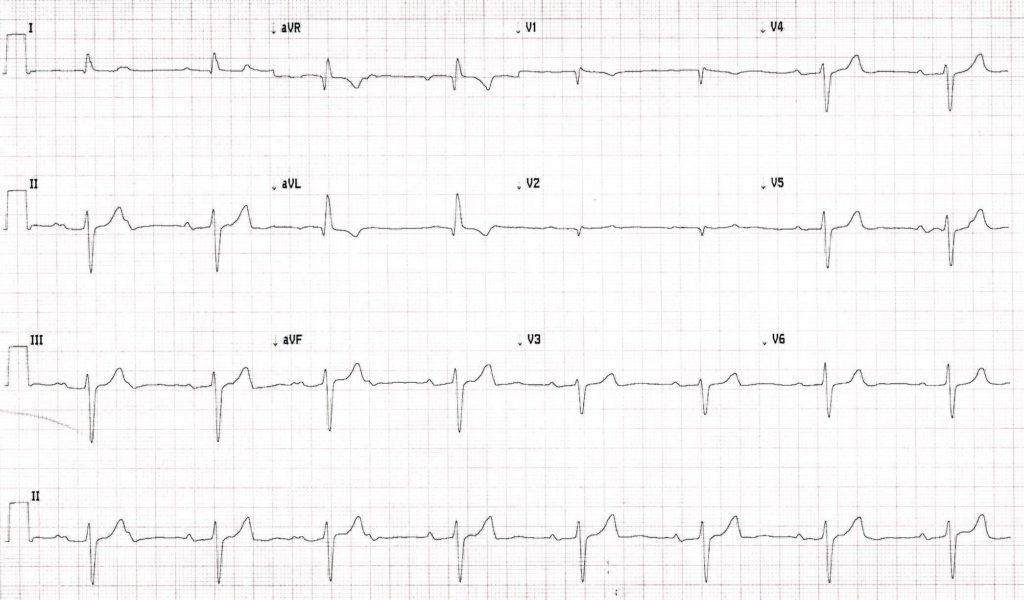
Our latest cardiology case report features a person in his mid-80s presenting to the hospital with lightheadedness and rectal bleeding for one day, with ongoing tenesmus. Check out ECG and determine the correct diagnosis!

SGLT2 inhibitors, ARNIs, and MRAs were associated with a significant decrease in hospital admission for heart failure.

New evidence from a Mount Sinai study suggested that consistent lack of sleep has negative effects on immune stem cells and increases the risk of inflammatory disorders and heart disease.

A new study encompassing data from more than 48,000,000 patients provides insight into the risk of major arterial and cerebrovascular diseases up to 49 weeks following initial COVID-19 diagnosis.
This risk also increased with age and was amplified in patients with HCV compared to patients without HCV.

Short and long nighttime sleep duration, along with daytime napping, were associated with a moderate increase in risk of cardiovascular diseases.

Dr. Thosani discusses the convergence of technology and physiology, treatment advancements, and virtual medicine capabilities in the field of heart arrhythmia.

A reduction in aspirin use was associated with significantly less bleeding and health care use, without an increase in thrombotic outcomes.

High CPAP adherence also resulted in a significant protective effect on the 30-day readmission for beneficiaries with heart failure.
Announced on September 15 by Edwards Lifesciences Corporation, the PASCAL Precision transcatheter valve repair system has received approval for transcatheter edge-to-edge repair in patients with degenerative mitral regurgitation.

In this episode of Don’t Miss a Beat, hosts Stephen Greene, MD, and Muthiah Vaduganathan, MD, MPH, provide a recap of the European Society of Cardiology Congress 2022. This recap begins with a discussion on the results of the phase 3 DELIVER trial, in which Vaduganathan served as an investigator, the ADVOR trial, and REVIVED.

Short-term treatment with rosuvastatin was not linked to changes in insulin resistance markers in a cohort of children with familial hypercholesterolemia.
On September 1, Bayer announced the US FDA had approved a label update for finerenone (Kerendia), which received initial approval in July 2021 for chronic kidney disease associated with type 2 diabetes, to include cardiovascular outcomes data from the FIGARO-DKD trial.

These reductions were only observed in short-term follow-up and were driven by early reductions within 12 months of telemedicine intervention.

An analysis of the NutriNet-Santé cohort provides insight into the apparent increase in cardiovascular disease risk associated with consumption of artificial sweeteners.
Advertisement
Advertisement
Trending on HCPLive
1
eGFR Underestimates CKD in Patients with Cancer, Study Finds
2
The HCPFive: Top News for Healthcare Providers from the Week of 10/18
3
42% on Povetacicept Reach KDIGO-Aligned UPCR Target in RAINIER
4
Q&A: Looking Beyond Body Surface Area in Atopic Dermatitis Treatment Selection
5