





Cardiology
Latest News
Advertisement
Latest Videos


CME Content






















































Advertisement
More News
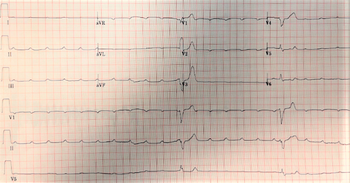
Our latest case report from Brady Pregerson, MD, features a patient in their mid-60s with a history of hypertension and hyperlipidemia who is brought in by medics with severe bradycardia and diaphoresis after a near syncopal episode. Can you determine the correct diagnosis?
Aruna Pradhan, MD, MPH, joins The Heart Team at AHA 2022 to discuss the design, results, and her interpretation of the PROMINENT trial for practicing clinicians as well as how she interprets use of triglyceride-lowering agents in the wake of PROMINENT and RESPECT-EPA results.

At AHA 2022, Dr. Ray discusses the findings from the phase II open-label extension trial and highlights other important trial data for lipidologists.

A pair of studies leveraging NIS data detail the risk of cardiovascular complications during delivery admissions among pregnant persons with a history of systemic lupus erythematosus or use of assisted reproductive technologies relative to their counterparts who did not.

A deep dive into exciting late-breaking trial data at AHA 2022, differences in chest pain guidelines, and bringing patient voice into clinical research.
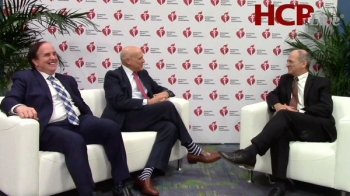
Ridker joins to discuss some of his recent work, provide a deep dive into use of inflammatory biomarkers for identifying patients with residual inflammatory risk, provide perspective on use of MACE compared with all-cause mortality in cardiovascular clinical trials, and discuss the optimized uptake of SGLT2 inhibitors in care.
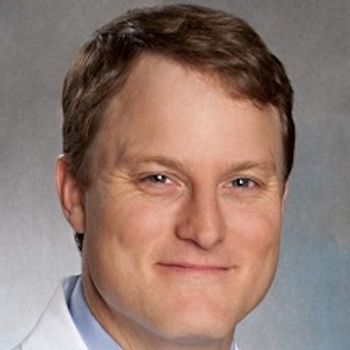
A Q&A with Dr. Bonaca highlights new data on rivaroxaban for PAD and the late-breaking science at AHA 2022.

Data from a pair of presentations at AHA 2022 Scientific Sessions provide clinicians with insight into the effects of surgical vs endovascular procedures for improving prognosis and reducing amputation in patients with peripheral artery disease.

In this episode of Don't Miss a Beat, hosts Muthiah Vaduganathan, MD, MPH, and Stephen Greene, MD, are bringing you insights from the AHA 2022 Scientific Sessions. In the episode, which was recorded on day 2 of the 3-day meeting, our hosts offer listeners perspective on the EMPA-KIDNEY and the TRANSFORM-HF trial, the latter of which Greene served on as an investigator.

The trial achieved its primary efficacy endpoint of terminating PSVT with self-administered etripamil, using symptom-based optional repeat dosing.
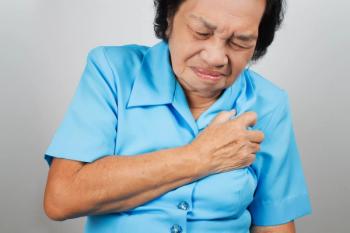
Results of the CTS-AMI study presented at AHA 22 suggests tongxiluo, which is an herbal medicine compound used in China, could reduce risk of cardiac events and mortality following a heart attack.

Patients with early VA-ECMO use saw comparable outcomes to those who initially received conservative therapy for hemodynamic stabilization.

Education and place of birth contribute the most to the racial and ethnic differences observed in mean CVH score.

The treatment reduced UACR by 37.1% and LDLc by 17.12 compared to placebo.

A single intravenous dose of NTLA-2001 significantly reduced abnormal levels of transthyretin in patients with ATTR amyloid cardiomyopathy, reports new data from AHA 2022.

Low sodium intake is considered less than 2.3 grams per day.
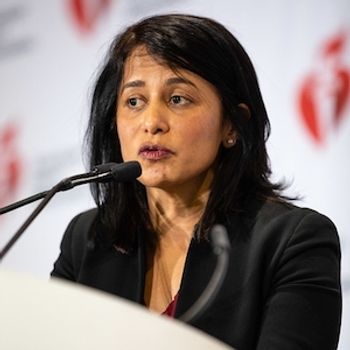
The late-breaking findings presented at AHA 2022 suggest the incidence of CV events was not lower among patients who received pemafibrate compared with those who received placebo.

Results of the TRANSFORM-HF trial presented at AHA 22 indicate there were no significant differences in rate of all-cause mortality or hospitalization with the use of torsemide compared with furosemide in people with heart failure.

In this column, Gregory Weiss, MD, provides perspective on a recent study providing evidence in support of metformin as a potential therapeutic option for treatment of atrial fibrillation.

National deaths from heart disease spiked in 2020 in the beginning of the COVID-19 pandemic, after an observed steady decline from 2010 to 2019.

Only 12% of people with CVD older than age 65 used wearable devices, despite estimates suggesting half of all people with CVD are older than age 65.

The 30-year analysis suggests a significantly higher risk associated with lead exposure and lower risk for particulate matter in the US than in the UK.


In a late-breaking abstract, investigators observed a 28% reduction in kidney disease progression or cardiovascular deaths compared to placebo.

Drs Erin Michos, Pam Taub, Robert Busch, Alison Bailey, and Jorge Plutzky, discuss use of ezetimibe and PCSK9 targeting agents for lipid lowering.
Advertisement
Advertisement
Trending on HCPLive
1
eGFR Underestimates CKD in Patients with Cancer, Study Finds
2
The HCPFive: Top News for Healthcare Providers from the Week of 10/18
3
42% on Povetacicept Reach KDIGO-Aligned UPCR Target in RAINIER
4
Q&A: Looking Beyond Body Surface Area in Atopic Dermatitis Treatment Selection
5