

This cardiology case report from Brady Pregerson, MD, features a man in his mid-80s presenting with tachypnea and diabetic ketoacidosis. Check out the ECG and determine the correct diagnosis!
This cardiology case report from Brady Pregerson, MD, features a man in his mid-80s presenting with tachypnea and diabetic ketoacidosis. Check out the ECG and determine the correct diagnosis!

This endocrine case report features a patient in their mid-50s with a history of recent TIA presenting to the hospital with increasing anxiety and insomnia over the past week. Can you determine the correct diagnosis?

A new post-hoc analysis used 5 clinical trials on dupilumab to assess the drug’s effectiveness with and without topical corticosteroids for atopic dermatitis/eczema patients.
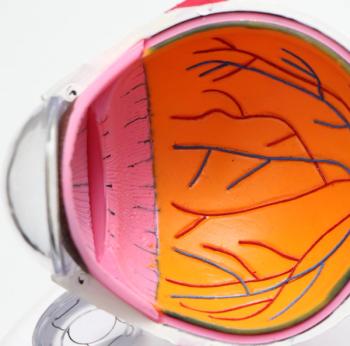
A new review considered the progression of 4 treatment options being researched and developed for the treatment of the progressive form of vision loss.

This case report from Brady Pregerson, MD, features a woman in her late 60s with diabetes mellitus and hypertension presenting to the emergency department with 3 hours of chest heaviness, nausea, and lightheadedness. Can you determine the diagnosis?

A new survey analysis delves into Americans' perspective on the CDC, and local and state health departments, and their handling of the pandemic.

Recent data during ECCO 23 show ustekinumab results in higher rates of clinical remission and clinical response in patients with inflammatory bowel disease.

A deep learning model can identify both iRORA and cRORA lesions at a similar sensitivity compared with human graders, according to a new analysis.

New research assessed the association between perceived stress and cognitive function in Black and White adults, finding that stress screening for high-risk adults may be needed.

No differences in adverse events, including infusion-related reactions, infections, and hypogammaglobulinemia, were reported among patients receiving rituximab and the biosimilar, CT-P10.
An economic analysis suggests Medicare reimbursement for complex cataract surgery fails to cover increased costs required for the procedure and may affect practice patterns.

Data presented in a research letter suggests that medicinal-thermal waters found in a spring in Las Salinas (near Madrid) had positive effects on plaque psoriasis.

Estimates of DR incidence and progression were lower than previously reported for American Indian and Alaska Native individuals served by the Indian Health Service, suggesting the potential for longer intervals between evaluations.

How much do you know about the impact of alcohol on rheumatoid arthritis and its treatment? Take this quiz to find out.
The new guidance is the first update since 2008, replacing the previous risk-based recommendations.

New research from Intermountain Healthcare presented at ACC 2023 examines the prognostic value of disproportionate CAC scores for 1 or more vessels relative to the value of total CAC score for predicting major adverse cardiovascular events.

New data demonstrated that the combined use of prednisone and methotrexate saw positive results in hair regrowth for patients with alopecia totalis or alopecia universalis.

Neutropenia, male gender, high serum creatinine, and albumin were all associated with fatal outcomes.

With ACC 2023 in the rearview, the HCPLive editorial team compiled perspectives on the meeting’s top piece of news from half a dozen clinicians specializing in various subspecialties across the spectrum of cardiovascular care.

Gregg W. Stone, MD, discussed the 5-year findings of the COAPT trial and provided insight into the benefit of the transcatheter procedure in high-risk patients with heart failure.

At ACC 2023, Hoeper provides insight into the key efficacy findings of STELLAR and delves into the safety concerns and generalizability of sotatercept for PAH.

An analysis of the PROMINENT, REDUCE-IT, and STRENGTH trials provides insight into the atherosclerotic cardiovascular risk associated with high-sensitivity C-reactive protein.

Although etanercept biosimilars demonstrated comparable efficacy, safety, and immunogenicity when compared with the reference drug, biosimilar treatment was associated with a better ACR50 response rate.

In an interview at ACC 2023, Safia Chatur, MD provided insight into the analysis of the PARADIGM-HF and PARAGON-HF trials, suggesting early eGFR changes should not deter continuation of sacubitril/valsartan.
Viet Le, PA-C, offers perspective on a study from Intermountain Healthcare reporting on the epidemiology, relationship to ASCVD risk factors, and clinical outcomes associated with Lp(a) in real-world settings.

In a research letter, patient perspectives were explored regarding access to dermatology clinic notes, with more than half reporting improved understanding due to notes.

There were increases in fibrosis stage for 24% of patients in the rifaximin-α group, compared to 43% of the placebo group.
In another interview segment, Castells discussed the safety profile of avapritinib for indolent systemic mastocytosis, as well as future research.

A new study from China shows predictive value of baseline PCV presence and PED characteristics among patients with nAMD receiving conbercept.

There was a 0.9% increase in the first dispensation of infliximab, either the biosimilar or originator during the first year of follow-up, as well as a 16.2% increase in infliximab dose escalation, a 2.4% decrease in the dispensation of antibiotics, and a 2.6% decrease in the new use of prednisone.