





Cardiology
Latest News
Advertisement
Latest Videos







CME Content






















































Advertisement
More News

After adjustment for known cardiovascular risk factors, investigators found women with a hypertensive disorder of pregnancy, including preeclampsia and gestational hypertension, during their first pregnancy had a 63% greater risk of future cardiovascular disease compared to women with normotensive pregnancies.

A discussion into available pharmacotherapy for obesity and the uptake in practice of newer agents.

These findings suggest the importance of COVID-19 vaccination for patients with OHT.

The prevalence of sleep-disordered breathing differed across various etiologies of heart failure.

There was no statistically significant difference in mean systolic blood pressure for the self-monitoring groups vs the usual care group.

Treating 100 older patients (≥60 years) with hypertension for approximately 3 years would prevent 1 major adverse cardiovascular event.

Sleep disordered breathing is frequently cited in patients with heart failure due to multiple factors included hypoxemia, sympathetic activation and systematic inflammation.

The study authors used data from Medicare beneficiaries who survived a heart attack between 1995 and 2019.

Investigators observed no reduction in readmission or mortality in a remote monitoring program with incentives for patients previously hospitalized for HF.

The Massachusetts General Hospital investigator discusses how LVADs and mechanical circulatory supports have altered the national heart donor strategy.
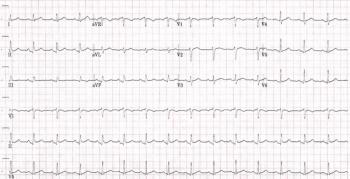
Our latest case report features a woman in her early 60s presents to the hospital with pleuritic midsternal pain radiating from left to right and to left upper back. Check out the EKG and see if you can determine the correct diagnosis!

The rate of long-term survival after 10 years in patients surviving the initial hospital stay after OHCA was between 62% and 64%.

Jennifer Green discussed weight management and obesity during the annual Pri-Med West conference.
Type 2 diabetes can be more aggressive in younger patients.
There is concern for cardiovascular patients over missed screenings during the pandemic.
The pandemic has removed some of the barriers of medicine.
Phone communication may have decreased in recent years among doctors.

Expert cardiologists discuss CAD guidelines and approaches to management of patients with polyvascular disease.

Dr Sahil Parikh and other experts discuss engagement of cardiologists in patients diagnosed with polyvascular disease and challenges in screening patients.

Steve R. Ommen, MD, leads a review of common mutations seen in hypertrophic cardiomyopathy and the role of biomarkers and genetic testing in HCM.
Martin S. Maron, MD, discusses the incidence and prevalence of hypertrophic cardiomyopathy and age of disease expression.

Data show 7 risk factors, many potentially modifiable, accounted for 85% of the risk of first AMI in young women and men.

Investigators use data from the CDC WONDER database to assess contemporary trends in disease-specific cardiovascular causes of mortality among cancer patients in the US from 1999 to 2019.

The participants included more than 2,000 pregnant individuals at higher risk of preeclampsia.

A 3-month trial found reducing sedentary time by just an hour per day was enough to produce statistically significant changes in biomarkers for cardiovascular risk among patients with metabolic syndrome.
Advertisement
Advertisement
Trending on HCPLive
1
eGFR Underestimates CKD in Patients with Cancer, Study Finds
2
The HCPFive: Top News for Healthcare Providers from the Week of 10/18
3
42% on Povetacicept Reach KDIGO-Aligned UPCR Target in RAINIER
4
Q&A: Looking Beyond Body Surface Area in Atopic Dermatitis Treatment Selection
5