




Cardiology
Latest News
Advertisement
Latest Videos






CME Content






















































Advertisement
More News

Investigators contribute more detailed understanding of the association between sleeping disorder and cardiovascular event risks.

Late-breaking data from SLEEP 2022 show there may be biological plausibility for cardiovascular risks in excessively sleepy individuals.
After new data from the Diabetes Prevention Program Outcomes Study suggested neither metformin nor lifestyle intervention addressed the cardiovascular risk in patients with prediabetes, we asked experts at ADA 2022 if it was time to rethink metformin as first-line therapy in type 2 diabetes.

EMPRISE: Empagliflozin Bests GLP-1 RAs, DPP-4 Inhibitors for Reducing Heart Failure Hospitalizations
A 5-year, real-world study comparing the safety and efficacy of empagliflozin against other glucose-lowering agents, EMPRISE suggests empagliflozin was associated with relative risk reductions for heart failure hospitalization greater than 50% compared with DPP-4 inhibitors and greater than 30% compared with GLP-1 receptor agonists.

Prof. Hertzel Gerstein discusses new ELIXA biomarker findings from ADA 2022.

The diabetologist and professor discusses new findings from the ReTUNE trial, which disparage the utility of BMI in defining diabetes risk and remission opportunity.

New post hoc data from the STEP 1 and 4 trials show an approximate 60% risk reduction of type 2 diabetes over 10 years versus placebo.

Uninsured adults with low income in nonexpansion states experienced worse access and cardiovascular risk factor management compared to insured adults.
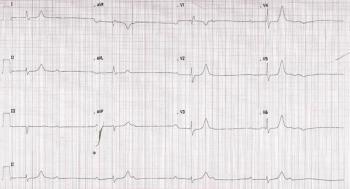
Our latest case report from Brady Pregerson, MD, features an elderly male with a past medical history of diabetes and stage 5 CKD presenting with 2 days of nausea, vomiting, and generalized weakness. Check out the EKG and determine the correct diagnosis!

Naomi Fisher, MD, offers perspective on the changing landscape of diabetes management and how the addition of new agents to the ADA's Standards of Care might impact care of patients.

Expert cardiologists discuss data from COMPASS trial and the role of rivaroxaban and low-dose aspirin in treatment of patients with CAD and PAD.
Sahil Parikh, MD, shares how lack of access to or awareness of DPI [dual pathway inhibition] causes many practices and health care providers to face a challenge in treating CAD [coronary artery disease].

HDL-C level >80 mg/dL was associated with higher risk of all-cause and cardiovascular death in patients with CAD, compared with those with normal HDL-C levels.

Expert cardiologists share strategies for educating patients on the treatment and management of hypertrophic cardiomyopathy.
Drs Steve R. Ommen, Martin S. Maron, Javed Butler, and James Januzzi provide insight on the evolving treatment landscape for obstructive hypertrophic cardiomyopathy.
A panel of experts in cardiovascular medicine review the use of mavacamten as seen in the VALOR-HCM study for patients with symptomatic oHCM who are eligible for septal reduction therapy.
Martin S. Maron, MD, examines long-term data with mavacamten for oHCM treatment that was presented at ACC 2022.
Cardiac specialists discuss improvement in health status with different treatments for hypertrophic cardiomyopathy.
John A. Spertus, MD, MPH, and Martin S. Maron, MD comment on the role of mavacamten in oHCM as seen in the EXPLORER-HCM trial.

Childhood BMI, SBP, and total cholesterol level among those risk factors associated with adult cardiovascular events.
Steve R. Ommen, MD, discusses the use of novel agents in the pipeline for the treatment of obstructive hypertrophic cardiomyopathy (oHCM).

A systematic review and meta-analysis of more than 70 RCTs details a J-shape dose-response relationship between omega-3 fatty acid consumption and blood pressure, with 2-3 grams per day considered the optimal dose for blood pressure lowering.
Steve R. Ommen, MD, leads a discussion on factors to consider when choosing treatment for hypertrophic cardiomyopathy (HCM).
Experts in cardiology review invasive treatments, challenges with HCM treatments, and how to optimize treatment for patients.
Drs Javed Butler, Martin S. Maron, Steve R. Ommen, and James Januzzi provide insight on approaching treatment of HCM with pharmacologic and nonpharmacologic interventions.
Advertisement
Advertisement
Trending on HCPLive
1
eGFR Underestimates CKD in Patients with Cancer, Study Finds
2
The HCPFive: Top News for Healthcare Providers from the Week of 10/18
3
42% on Povetacicept Reach KDIGO-Aligned UPCR Target in RAINIER
4
Q&A: Looking Beyond Body Surface Area in Atopic Dermatitis Treatment Selection
5