
The headline drug class has been quickly added to cardiologists' toolsets, amid more and more phase 3 data.
The headline drug class has been quickly added to cardiologists' toolsets, amid more and more phase 3 data.
Despite an embrace of greater patient populations by the FDA, cardiovascular research into stem cell therapy has been slow and burdened.

A six-month regimen of the oral therapy showed patients with out-of-proportion PH improved their six-minute walking test scores.
How do a pair of burgeoning agents influence endocrinology and renal outcomes in cardiovascular care?

In a presentation at the annual HFSA meeting, investigators compare the level of care and ultimate outcomes treating heart failure patients for cardiologists and non-cardiologists.
As safety and efficacy programs advance, clinicians consider the investigative therapy's potential in cardiology.
At the annual HFSA meeting, investigators explain how obstructed sleep apnea and central sleep apnea drive cardiovascular disease.
A new study shows just more than 55% of all heart failure-based trials on ClinicalTrials.gov have shared results since 2008.

Investigators report findings no significant associations between BP control and cardiovascular mortality in patients from differing race/ethnicities with HF, stratified by hypertension treatment.

A post hoc analysis of TOPCAT shows older patients with HFpEF report consistent efficacy with spironolactone, but worsening safety outcomes.

Prior to the start of HFSA, Dr. Murray dives through how the extensive history of heart failure research has lead to today's greatest cardiovascular breakthroughs.
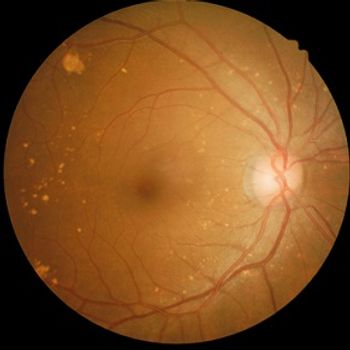
A former D.C. healthcare attorney and founder of the Macular Degeneration Association discusses legal problems faced by retina specialists when providing care to their patients with AMD.

Chirag Jhaveri, MD, took part in a Q&A about the results of the phase 3 HAWK and HARRIER studies examining brolucizumab for treatment of nAMD.

Results of a study from investigators at the Retina Center of Minnesota found that same-day injections were preferred by more than 97% of patients.

Manjot Gill, MD, discusses the results of her study which found early diagnosis and treatment of neovascular age-related macular degeneration could help save a patient’s vision.

Artificial intelligence could be the future of detecting certain diseases in the eye, after a study presented at ASRS 2019 found that the EyeArt system was effective in detecting referable diabetic retinopathy from images.

Investigators presented 36-month results of a study which found that treatment with a single intravitreal injection of the FAi provided anti-inflammatory treatment for 3 years in patients with non-infectious uveitis affecting the posterior segment of the eye

Additional analyses of the phase 2 BOULEVARD trial, which found faricimab not only led to improved best-corrected visual acuity and central subfield thickness from baseline, but also provided anatomical benefits and displayed a potential for extended durability compared to anti-VEGF monotherapy, were presented during ASRS 2019
Medical Director of the Macular Degeneration Association discusses how the evolution of anti-VEGF treatments has changed the landscape of AMD care and the lives of patients.

Results of a study presented at ASRS 2019 found that biweekly anti-VEGF dosing may be an effective treatment for treating nAMD refractory to standard monthly dosing.

While often seen in a negative light, some physicians have found ways to incorporate electronic medical records to improve their practice.

Eleonora Lad, MD, PhD, presented results of a post-hoc analysis evaluating the impact of baseline characteristics on lesion progression in patients receiving APL-2 for geographic atrophy at ASRS 2019.
Carl Regillo, MD, of Wills Eye, and Michael Stewart, of the Mayo Clinic, discuss changes they would like to see in their speciality at ASRS 2019.

W. Lloyd Clark, MD, of Palmetto Retina Center, discusses clinical implications of the 52-week PANORAMA results, which found treatment with intravitreal aflibercept injections could reverse disease progression in patients with moderately severe to severe NPDR.
Jeffrey Heier, MD, presented 24-month results of the PRO-CON study, which found no statistical difference in conversion rates in fellow eyes regardless of prophylactic treatment with aflibercept injections, at ASRS 2019.

Early treatment and completing treatments key to visual acuity improvements in neovasculare age-related macular degeneration.

Ajay Kuriyan, MD, discusses what he warns patients to be aware of when seeking out treatment from stem cell therapies and why he believes other physicians should as well.

LADDER study results presented at ASRS revealed efficacy of the PDS was equal to that of monthly ranibizumab.
An oral therapy for aged-related macular degeneration could be on the horizon after displaying efficacy in a recent phase 2 study.
Carl Regillo, MD, who presented 96-week data of brolucizumab at ASRS 2019, discusses how brolucizumab could impact care of wAMD in a real-world setting.