
At the annual ACG meeting, Maria Abreu, MD, explains how drugs like ustekinumab can treat patients with Crohn's disease and patients with ulcerative colitis, while other medications do not work as well in both diseases.
At the annual ACG meeting, Maria Abreu, MD, explains how drugs like ustekinumab can treat patients with Crohn's disease and patients with ulcerative colitis, while other medications do not work as well in both diseases.

After 44 weeks of maintenance therapy, endoscopic improvement was observed in 43.6% and 51.1% of patients treated with the study drug q12w and q8w, respectively.

Roberto Simons-Linares, MD, presents new data at the annual ACG meeting on the association between hepatitis viral infections and acute pancreatitis.

In 455 subjects, the eradication rate of RHB-105 was superior to that of the active comparator (83.8% vs 57.7%, p< 0.0001).

Among patients with UC, elderly individuals (age >65 years old), females, and Caucasians were more likely to be affected by psychiatric illness.

In a late breaking clinical trial at ACG 2019, investigators say AK002 shows promise in treating patients with EGID.

Compared to hospitalized patients with ulcerative colitis but without C diff infection, hospitalized patients with ulcerative colitis and C diff experienced increased mortality.
Investigators present data from a new study showing that RHB-104 can effectively combat MAP infections for patients with moderately to severely active Crohn’s disease.
Brian Feagan, MD, shares takeaways from his ACG presentation of phase 2 data on risankizumab for the treatment of Crohn's disease.
During the annual ACG meeting, Roberto Simons-Linares, MD explained how cannabis use impacts the fluids of patients suffering from acute necrotizing pancreatitis.

At ACG 2019, Ikuo Hirano, MD, FACG, presents phase 3 results of budesonide oral suspension for the treatment of eosinophilic esophagitis.

Diagnostic procedures of the large intestine were the most common claims within those against gastroenterologists, making up 26% of all closed claims.

The study drug at 600 mg was associated with significant improvements in Crohn’s Disease Activity Index scores as early as Week 2.

From baseline to 12 weeks, all participants demonstrated a significant reduction in total percentage of abnormal bowel movements, overall IBS Symptom Severity Score, abdominal pain and bloating severity, and an improvement in health-related quality of life.
Investigators observed clinical response in 15 patients (83%) who underwent the second IV reinduction. Three patients (17%) did not respond and were taken off the therapy.

In a retrospective study presented at the annual ACG meeting, investigators examine sex and ethnicity data involving linkage to care for hepatitis C virus patients.

In data presented during the annual ACG meeting, investigators show vedolizumab can be safe and effective for treating pediatric patients with IBD who have failed anti-TNF therapy.
In a new poster presented at the annual ACG meeting in San Antonio, researchers compare morbidity and mortality for ulcerative colitis patients with or without C. diff or CMV infections.
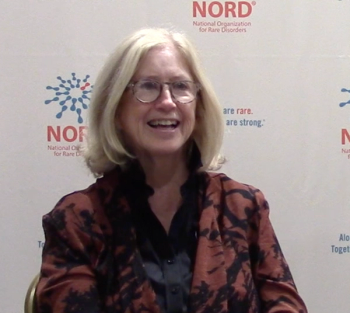
Moira Gunn, PhD, professor of bioentrepreneurship at the University of San Francisco, discusses the biggest hurdles those in healthcare face when looking to create new therapies for rare diseases.
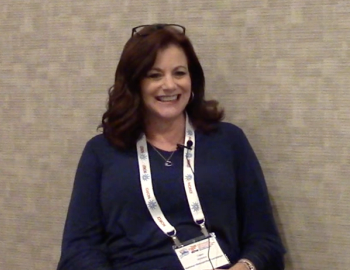
Dawn Rotellini, COO of the National Hemophilia Foundation, discusses how recent policy changes seeking to improve access to and create new therapies for patients with rare diseases.

A review of novel drug approvals in 2018 found more than half of all novel approvals were for rare diseases and that 2018 also saw more novel drug approvals for rare disease than any other year.
A new study shows that bronchoscopy practice, procedure, and tools vary by facility, and in assessment duration.
Dawn Rotellini, chief operating officer of the National Hemophilia Foundation, discusses the important of including patient advocacy groups in annual meetings such as the NORD Summit.

A new analysis of an open-label extension study of the phase 3 PREVENT study is providing further evidence of the safety and efficacy of the treatment of the neuromyelitis optica spectrum disorder.

A new study presented at NORD Summit 2019 found rare disease is underrepresented in published literature and, more often than not, articles are not available in open-access journals.
Moira Gunn, PhD, professor of bioentrepreneurship at the University of San Francisco, discusses why it is important for primary care providers to keep up-to-date on rare disease developments.
Dawn Rotellini, chief operating officer of the National Hemophilia Foundation, discusses the impact recent advances in technology and changes in policy focusing on rare diseases have impacted the disease state of hemophilia.
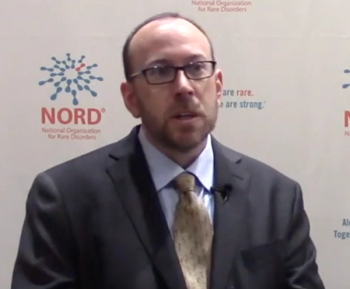
Lucas Kempf, MD, associate director of the FDA's Rare Diseases Program, discusses the impact of recent policy changes that center around increasing access to and creating new therapies for rare disease.
From medical marijuana to vape devices, there seems to be a divide in defining what's legal for use, and what's actually beneficial for users.
How the LAMA therapy manages one of the integral facets of COPD care.