
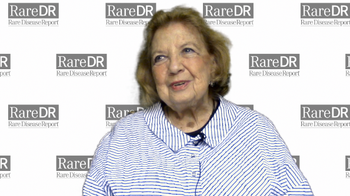
At NORD’s 2018 Rare Impact Awards, Rare Disease Report® sat down with Estelle Benson, founder of GBS|CIDP Foundation International, to discuss what the organization is doing to fight GBS.
At NORD’s 2018 Rare Impact Awards, Rare Disease Report® sat down with Estelle Benson, founder of GBS|CIDP Foundation International, to discuss what the organization is doing to fight GBS.

From food deserts to hazardous jobs that inhibit exposure and limit the means to prevent it, people of low SES are at greatest environmental health risk.

Researchers intend to follow observed infants into early childhood to gauge the vitamin's influence on pediatric asthma rates.
Children given immunocap radioallergosorbent tests when hospitalized for asthma avoided re-hopsitalization twice as long as children not given the test.

A type of flavonoid found in dark-pigmented fruits like red grapes and blueberries may slow the lung function decline that occurs with aging.
The inhaled corticosteroid from GSK is indicated for pediatric asthma patients aged 5-11 years old.

Older people adhering to the antioxidant-rich diet were less likely die from cardiovascular conditions when exposed to greater ambient air pollution.

The monoclonal antibody reported quick and consistent exacerbation rate reduction in patients with severe eosinophilic asthma.

The once-daily, triple-drug inhaler therapy reported improvements in exacerbation rate and risk to first event.

Over 16 months, a greater rate of patients reported returning visits, proper inhaler use understadning, and overall satisfcation.

Reducing use of opiates near the end of hospital stay, especially 24 hours prior to discharge, may reduce outpatient prescription of opioids.

Infants whose mothers were exposed to carbon monoxide in the second and third trimester were at highest risk for reduced lung function when they were tested at 1 month of age.
The therapy showed reduction in nighttime resting heart rate comparable to that of beta blockers.

The hazard ratios for ozone measured at bone as a single pollutant showed statistically significant higher risks for development of asthma, allergic rhinitis and eczema.
Vincent Miller, MD, chief medical officer of Foundation Medicine, discusses FoundationOne CDx, an FDA-approved diagnostic that is clinically validated for solid tumors.
Patrick Dunegan, Rare Impact Awardee, explains how GSSSI, a 501c3 nonprofit organization, is working to fight gastroparesis, a gastric motility disorder known to be very debilitating for those who suffer from it.

Researchers are using hi-def retinal and neuroimaging techniques to elucidate the relationship between pathology in layers of the retina and downstream brain alterations.

Patients treated with dabigatran following myocardial injury after noncardiac surgery were 20% less likely to die of a cardiovascular cause.

The data may be helpful for clinicians in developing treatment courses for patients exhibiting withdrawal symptoms from short-acting opioids.

David Walling, PhD, discussed the biggest misconceptions about patients with schizophrenia, including the high rate of suicide among this population.
Employed patients who were also impaired on functional capacity measures, showed larger overall treatment response than unemployed patients regardless of functional capacity measure scores.

Patients who abused substances reported significantly greater cardiovascular and all-cause mortality risk from type 1 MI — despite also reporting lower risks for traditional factors.

David Walling, PhD, discussed the results from a pharmacokinetic and safety study that evaluated aripiprazole lauroxil NanoCrystal Dispersion therapy initiation.

Following the novel gene-editing tech's approval for the treatment of cancer last year, researchers at Roski Eye Institute are exploring its potential to treat ophthalmic disease.
The technology includes enhanced features like a patient management system that increases the ease of use for physicians.
The 14-point guideline included recommendations for initial psychiatric evaluation and assessment, treatment goals and plans, use of multiple medications, and for patients that are pregnant or breastfeeding.

MDD and PTSD are significantly associated with military trauma and PTSD specifically, is at an increased with military sexual trauma among females.

The use of the popular smartphone application Pokémon GO—and possibly similar games—could have potential therapeutic benefits for those with mental illness.
The HeartLight Excalibur Balloon, designed for the treatment of paroxysmal atrial fibrillation, is ultra-compliant and can be resized in real-time.

According to survey data released by the American Psychiatric Association, almost 50% of Americans believe the crisis is impacting their peers, and 31% know someone addicted to opioids.