
Criner reviews findings from AIRFLOW-3 and describes the subgroup of targeted lung denervation treatment responders being targeted in AIRFLOW-4.
Criner reviews findings from AIRFLOW-3 and describes the subgroup of targeted lung denervation treatment responders being targeted in AIRFLOW-4.
Results highlight dupilumab’s real-world benefit for asthma control in patients with and without coexisting chronic rhinosinusitis and/or nasal polyposis.

At ATS 2025, these post-hoc analysis findings on taladegib (ENV-101) highlight the treatment’s efficacy for idiopathic pulmonary fibrosis.

Attaway describes the importance of screening for and treating sarcopenia in patients with COPD and clinical gaps that complicate this process.

In this interview at ATS 2025, Arthur Reingold, MD, highlights the role of pulmonologists and other health care providers in combatting vaccine misinformation.
Marchetti explains the benefits of assessing RV/TLC rather than absolute RV to determine the efficacy of BLVR in patients with emphysema and hyperinflation.

This analysis highlights rademikibart’s effect on blood eosinophil counts in those with asthma, exploring whether there was an IL-4Rα class effect.

Abramson's presented operation indicates that Coats disease can manifest bilaterally and is potentially caused by multiple independent genes.

Williams discusses her takeaways from the 2025 Envision conference and her expectations for the future of both ophthalmology and its practitioners.

This interview at ATS 2025 highlights the talk given by Grace Lee, MD, MPH, regarding the policy side of public health concerns over widespread immunization.
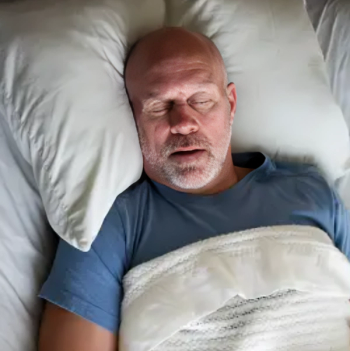
A post-hoc analysis of SURMOUNT-OSA highlights tirzepatide’s consistent benefit across all baseline OSA severity groups.

The FIBRONEER-IPF and FIBRONEER-ILD data highlight nerandomilast’s efficacy and safety in idiopathic pulmonary fibrosis and progressive pulmonary fibrosis.
This analysis highlights the rapid improvements seen in patients with uncontrolled asthma within 24 hours of their initial rademikibart dose.

The pooled analysis of ENHANCE clinical trial program data highlight improvements in HRQoL, dyspnea, and COPD symptoms with ensifentrine monotherapy.

Nearly all treated patients received glucocorticoids, but many quickly needed later-line therapies, especially those with non-incident pulmonary sarcoidosis.

The ProVENT data highlight dupilumab’s efficacy in treating severe asthma, with improvements in control, quality of life, and exacerbations being observed.

Phase 3 BATURA data reveal a 47% reduction in the risk of severe exacerbations in mild asthma with albuterol/budesonide (Airsupra) versus albuterol alone.

In this analysis, investigators found consistent benefits over placebo among children with type 2 asthma treated with dupilumab, regardless of condition length.

At 2025 New Wave Dermatology, HCPLive spoke with Miranti on treating the 4 pillars of pathogenesis, including sebum production, inflammation, and more.
In this ATS 2025 interview, Arthur Reingold, MD, was asked about the effects of the COVID-19 pandemic on immunization rates as well as pulmonologists’ role.

These data from ATS 2025 point to climate change as a potential influence on the burden associated with obstructive sleep apnea (OSA).

Pande explains findings from his research on immunosuppression in interstitial lung disease suggesting this treatment does not affect fibrosis progression.

Over 60% of patients admitted to the ICU with ARF experienced some degree of sleep disturbance after admission.
In this interview at ATS 2025, Reingold highlighted his presentation on the global immunization divide and overcoming barriers to universal vaccine coverage.

These data, presented at ATS 2025, highlight the efficacy results of methotrexate when compared to prednisone for pulmonary sarcoidosis.

New research sheds light on improved waitlist outcomes after new allocation guidelines for lung transplants prioritizing medical urgency were implemented.

At 2025 New Wave Dermatology, Zirwas highlights the most useful dermatology studies from the past 2 years, covering AD misdiagnosis, alopecia, contact dermatitis, and more.
Zirwas shares top dermatology studies, highlights AD misdiagnosis, and reveals how pollution and fabrics may trigger adult-onset atopic dermatitis.
Williams discusses the complicated relationship between ophthalmologists and their work as well as the benefits and challenges of reaching out to underrepresented groups.
Zirwas outlines a 4-visit approach to diagnosing spongiotic dermatitis, helping dermatologists manage uncertain rashes more effectively.