

PTSD was associated with a 3-fold increased risk of all-cause mortality or a major heart event in 12 months following cardiac arrest.
PTSD was associated with a 3-fold increased risk of all-cause mortality or a major heart event in 12 months following cardiac arrest.

The updated cholesterol guidelines continue to emphasize a healthy lifestyle for people of all ages and the need for personalized treatment plans. They also lay out a path for escalating treatment when statins aren’t sufficient.

Obese patients who underwent weight-loss surgery prior to receiving a liver transplant had a significantly lower risk of metabolic complications post-transplant than those who followed medical weight loss prior to transplant.
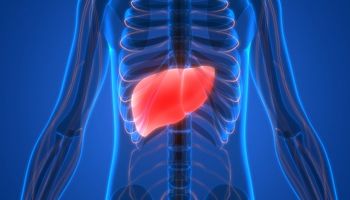
The first results of a study on the use of monthly RNAi with ARO-HBV in patients with chronic hepatitis B virus infections indicate that the treatment effectively reduced all measurable viral products, including HBsAg.
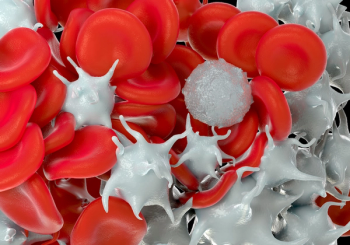
The biology of thrombopoietin metabolism in advanced liver disease may be influenced by platelet count and degree of liver failure.

In visits with overweight or obese children with high blood pressure, pediatricians either provide no communication about BP or unclear or dismissive statements, unless SBP is ≥120 mmHg.

Glenn Tillotson, PhD, highlights possible treatment options besides antibiotics that may be worth evaluating for the infectious disease.

Data from a new study indicate that trauma is an independent risk factor for cardiovascular disease in sexual minority women, suggesting it should be screened for as a risk factor in this population.
Dale Gerding, MD, highlights newest and most promising treatment approaches and preventions for C difficile.

Catia Mato Ferreira, PhD, global medical lead of Medical Affairs at Pfizer discussed the preventive potential of the C difficile vaccine that is currently in development in a phase 3 trial.
Nicola Petrosillo, MD, discusses current controversies in C difficile prevention and treatment.

Investigators have found an association between opioid use and cardiovascular mortality.

Combining glaucoma medications into a single eye drop could simplify regimens and reduce costs for patients. Investigators found that a combination eye drop also significantly reduced intraocular pressure compared to control.

Patients with diabetic macular edema (DME) switching to aflibercept from ranibizumab improved their BCDA by an average of 5 letters over 9-12 months.

Authors compared investigator assessments to reading center-assessed optical coherence tomography outcomes to evaluate intravitreal aflibercept injection with or without rescue photodynamic therapy.

A new study emphasizes the need for specially designed syringes that ensure accuracy and precision when administering anti-VEGF agents via intravitreal injection.
Ronald Gentile, MD, and colleagues investigated pain-reduction strategies following intravitreal injections. The results have implications for patient experience, physician ratings, and treatment adherence.

R. Theodore Smith, MD, PhD, discusses the importance of developing non-invasive technologies that can detect age-related macular degeneration earlier.
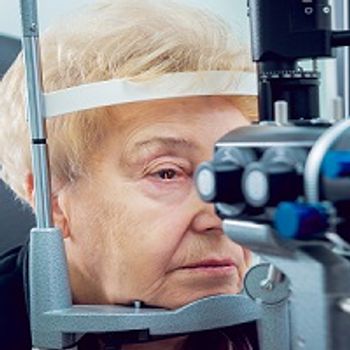
A new phase 3 study suggests that physicians should shift away from periocular injections, and towards intravitreal injections of corticosteroids for uveitic macular edema.

While it is critical to recognize diabetic macular edema patients with delayed treatment response to reduce the progression of vision loss, improve quality of life, this may come at a cost to the institution.

After analyzing 57,925 injections administered 2013 and 2017, investigators observed an increase in aflibercept use, with a reciprocal decline in ranibizumab across all regions, while the use of bevacizumab remained stable.

Patients treated with faricimab every 16 weeks had a mean improvement of 11.4 letters from baseline, compared to 9.6 letters in those treated with ranibizumab every 4 weeks.

The phase 2 FILLY trial found that APL-2 injections both monthly and every other month slowed lesion growth compared to sham.

The data presented at the American Academy of Ophthalmology indicates dosing IAI with treat and extend resulted in more visual acuity gains when compared to fixed dosing.
R. Theodore Smith MD, PhD, discusses the concept of hyperspectral autofluorescence imaging and how clinicians can learn more from this method than standard autofluorescence imaging.

According to an analysis of 84,228 online reviews of 7,372 ophthalmologists, the average rating for a physician with a wait time exceeding 15 minutes was 3.903.

In a new study conducted in Taiwan, investigators found that use of metformin to treat diabetes also reduced the risk of AMD development over a 13-year period.

In patients with neovascular AMD, 24% receiving brolucizumab had intra-retinal fluid and/or sub-retinal fluid compared to 37% of aflibercept-treated patients in the HAWK trial.

Peter Campochiaro, MD, professor of ophthalmology and director of the retinal cell and molecular laboratory at Johns Hopkins explains the burdens of receiving frequent anti-VEGF injection treatments.

An anti-PIGF, a plasma kallikrein inhibitor, and a pan RGD integrin antagonist are some of the investigational treatments in the pipeline for diabetic retinopathy and diabetic macular edema.