
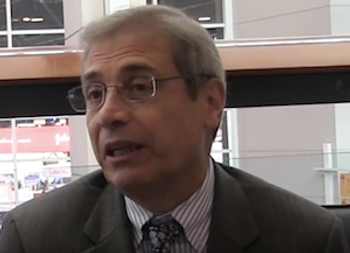
After a single dose of RGX gene therapy, the mean change in BCVA was +8 letters in cohort 3 and the average number of injections over the course of 6 months was 1.3 in a phase 1 cohort study.
After a single dose of RGX gene therapy, the mean change in BCVA was +8 letters in cohort 3 and the average number of injections over the course of 6 months was 1.3 in a phase 1 cohort study.

R. Theodore Smith MD, PhD, professor of ophthalmology at the Icahn School of Medicine at Mount Sinai discusses new research to reduce the burden of AMD and how imaging can revolutionize the retina space.

David Brown, a retina specialist discusses how retina and diabetes specialists can coordinate care and education for their patients as well as the outlook for AMD/DME research.

In a phase 1 trial, patients in the femto-assisted crosslinking treatment arm had a more favorable outcome in the retention of corneal thickness, when compared to the conventional therapy group.
In a phase 2 study, a long-acting, implantable delivery system for ranibizumab allowed patients with wet age-related macular degeneration to go up to 15 months before requiring a refill.
Dilsher Dhoot, MD, discusses the avenues where future research for diabetic macular edema will focus
A team of investigators has found that collaborative efforts among several leading medical institutions have helped increase the study of new medications for myelodysplastic syndromes (MDS).

A panel of members from the US Food and Drug Administration (FDA) sat down to discuss the influential factors and projective trajectory of the rare disease pipeline.

RT001 has demonstrated arrest of disease progression in 2 patients with infantile neuroaxonal dystrophy.

Members from the FDA came together to participate in an informative session and discuss the traditional pathway and future outlook of clinical trials in rare diseases.

Ellen Sigal, PhD, discusses how she helped make the concept of the expedited FDA development program a reality.

Karlyne Reilly, PhD, discusses the Rare Tumor Patient Engagement Network and the importance of getting patients with rare conditions involved in cancer research.

Receiving a proper diagnosis can be one of the greatest challenges for a rare disease patient, but having the right tools can help.

Though new therapies are still in the distant future, advances in diagnosis may be on the horizon.

John Hopper, MBA, highlights advances made in the fight against rare cancers and discusses what’s next for the community.

Although there have been many successes experienced in the oncology community, more genomic data is needed.

A panel at the NORD 2018 Summit discusses how patients are the catalysts behind rare disease research and drug development.

William A Gahl, MD, PhD, discusses challenges associated with diagnosing rare diseases and how health care providers might overcome them.

Distinguishing pulmonary arterial hypertension in patients is a difficult early diagnosis. But seeking out a combination of unexplained symptoms is a good first step.
Experts advise that primary care physicians give pause next time they treat a patient with unexplained dyspnea—could it be pulmonary hypertension?
Though the commonly accepted ratio is 3:1 women, longtime clinicians suggest PAH ratio is more likely closer to 4:1.

Findings indicate that treatment interruptions are possible, with caveats.
Mary Beth Scholand, MD, outlines the best treatment practices for idiopathic pulmonary fibrosis (IPF) to date and therapies worth investigating in the future.

Nicola Hanania, MD, MS, director of the Airways Clinical Research Center at Baylor College of Medicine, explains the latest research on COPD treatments and outlines how they all measure.

The 2019 CHEST Meeting in New Orleans may be headlined by newly approved therapies including dupilumab and tezepelumab.
Using data registries from initial trials, companies such as Actelion will be looking to expand research beyond the first first or second year of care in patients with PAH.

Recent trials have evidenced that minority patient groups in particular are more likely to worsen their primary treatment adherence while embracing alternative medicine measures.

Data from a subgroup analysis of the IMPACT study, which compared inhale triple therapy FF/UMEC/VI to dual therapy FF/VI and UMEC/VI for the treatment of COPD, has been released.

FEF25-75 may be used as a parameter for early detection of beginning small airway obstruction in smokers with normal FEV1/FVC.
Once physicians know if it's the cause of PAH or just simply an overlap, comorbidities have to be closely monitored as disease progression.